
Vibrant Roots: The American Traditional Tattoo Styles Guide
2 months ago
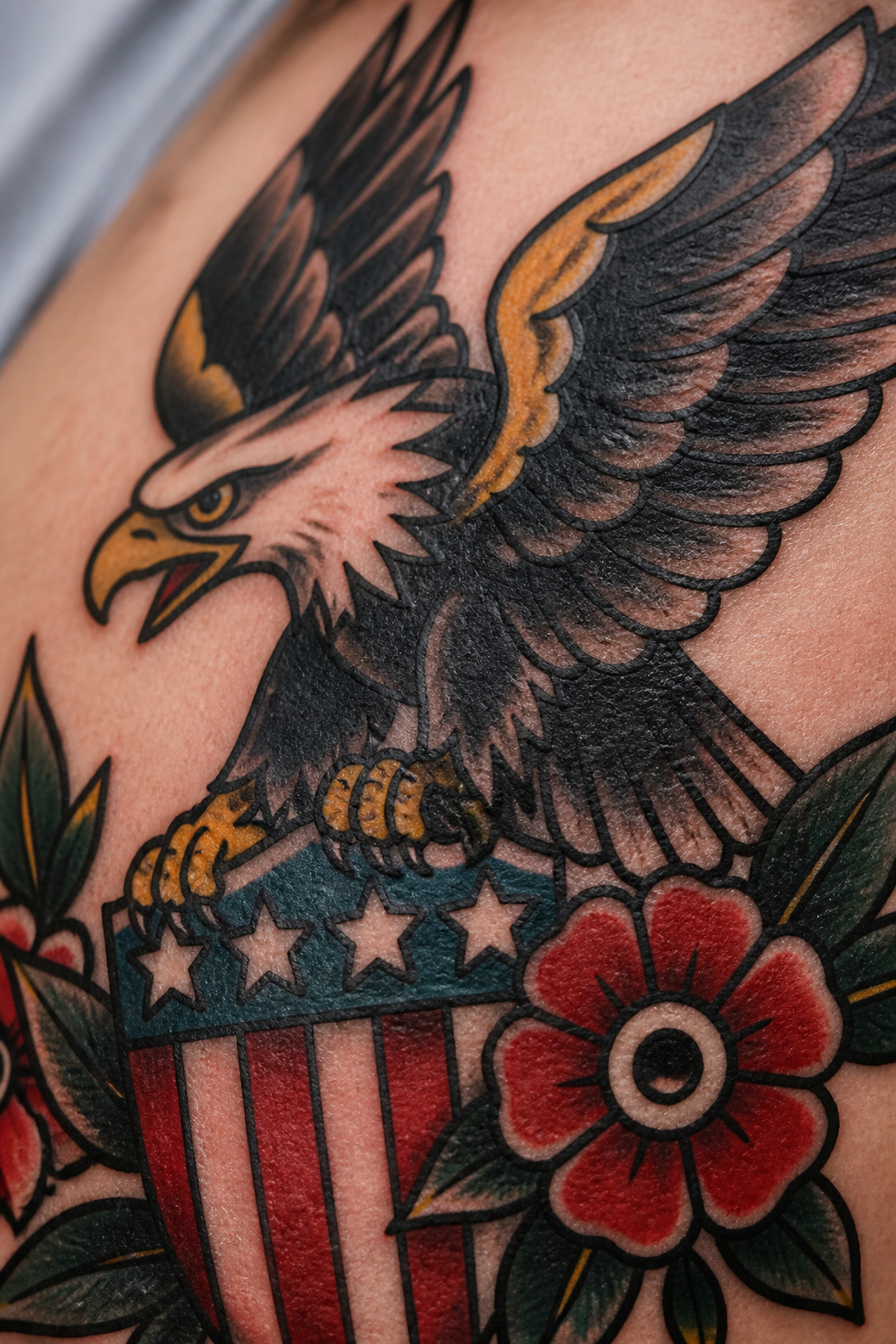
When navigating any comprehensive tattoo styles guide, American Traditional stands out as the bedrock of modern Western tattooing. Known as 'Old School,' this aesthetic is defined by its thick black outlines, a limited but punchy color palette, and high-contrast shading. It was forged in the docks and naval bases of the early 20th century, where clarity was king and designs had to be legible across a room.
The pioneers of this craft, most notably Norman 'Sailor Jerry' Collins, refined the style into a language of its own. They utilized heavy saturation of primary colors—reds, yellows, and greens—to ensure the ink would age gracefully over decades. This technical approach was a response to the era's hardware, demanding simplicity that remains incredibly popular among today’s elite collectors.
What makes American Traditional instantly recognizable are its iconic motifs. From majestic eagles and clipper ships to weeping hearts and bold daggers, the iconography is rooted in the concepts of strength, loyalty, and travel. There is no guesswork involved in an Old School piece; every line serves the purpose of structural integrity, ensuring the image doesn’t blur into a grey smudge over time.
Contemporary artists like Bert Grimm and modern masters like Ed Hardy expanded the reach of the style, bringing it into mainstream culture. Today, the movement continues to thrive through 'topical' updates while maintaining the same 'bold will hold' philosophy. Whether it is a small gap-filler or a full back piece, the simplicity of the design allows it to flow naturally with the body's musculature.
For those looking to start their collection, this style offers unmatched longevity. Because the saturations of black are so heavy, the contrast remains high even as the skin matures. It is the ultimate choice for someone who wants a piece of history that looks just as sharp thirty years down the road as it did on day one.