
Strategy and Skin: How to Plan a Successful Tattoo cover-up
3 months ago
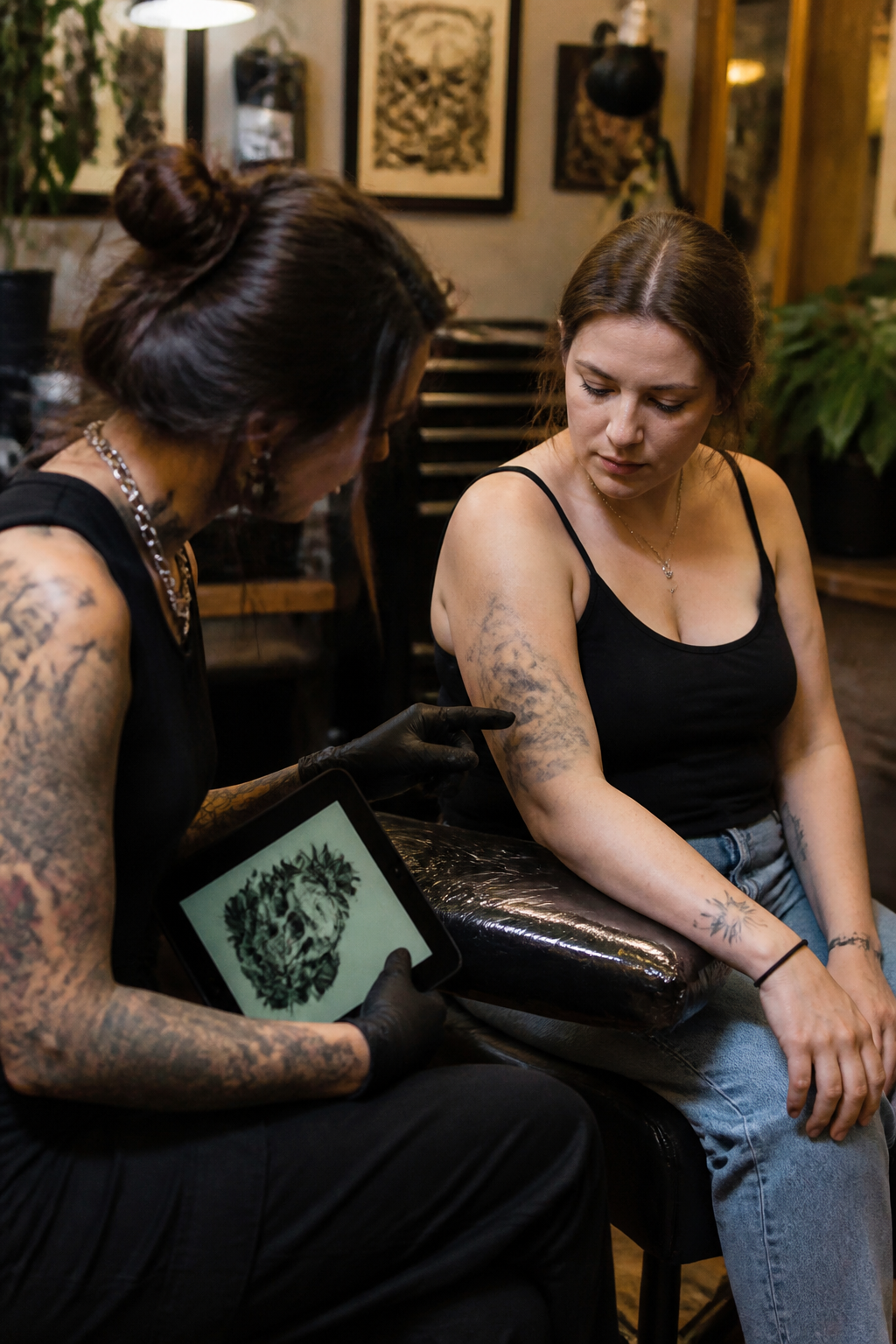
A professional tattoo cover-up is more than just a thicker layer of ink; it is a complex game of color theory and visual deception. Since tattoo pigment sits in the dermis, new ink does not sit on top of the old like paint. Instead, the colors blend together. This is why light colors cannot easily hide dark blacks, and why your artist must be a master of composition to effectively mask the past.
Design strategy is the most critical element of the process. Artists often use 'distraction' shapes—like dense floral petals, deep shadows, or intricate textures—to draw the eye away from the ghost of the original lines. The goal is to make the old ink look like a natural shadow or a structural element of the new piece, ensuring the previous design becomes invisible to the untrained eye.
Not every old piece is an immediate candidate for a fresh start. If your existing tattoo is excessively dark, scarred, or raised, a few sessions of laser fading may be necessary. 'Lightening the canvas' allows for a much broader range of colors and styles in your tattoo cover-up, preventing the new art from looking muddy or overly dark just to hide what was underneath.
Choosing the right artist for this task is non-negotiable. Cover-up specialists possess a deep understanding of how ink layers over time. They are honest about the 'limitations of the skin' and will often suggest larger, more detailed designs to ensure total coverage. When you find the right pro, that old regret becomes nothing more than a hidden foundation for a masterpiece.