
Stark Contrast: A Blackwork Tattoo Styles Guide
1 day ago
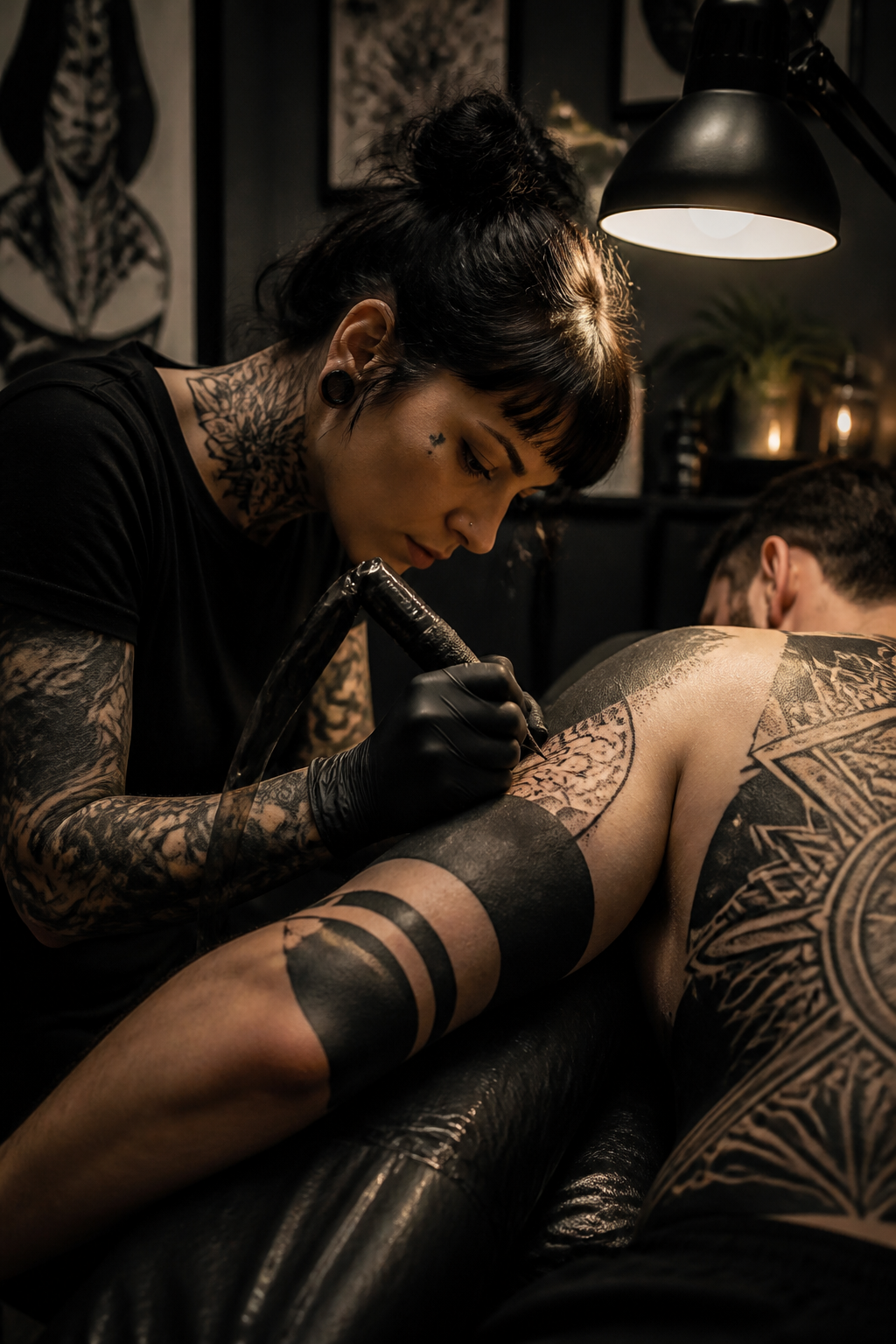
Blackwork is perhaps the most visceral form of body art, defined by its exclusive use of solid black ink without a drop of color or grey wash. While its roots trace back to ancient tribal traditions, modern blackwork has evolved into a sophisticated discipline. It rejects the soft gradients of realism in favor of high-contrast silhouettes and dense saturation that demands attention from across the room.
What makes this aesthetic instantly recognizable is the 'black out' technique, where large areas of the skin are fully saturated to create negative space designs. Contemporary artists like Hanumantra Lamar have pioneered this look, pushing the boundaries of how much ink the human canvas can hold. It is a style that prioritizes the flow of the body, using heavy shapes to accentuate musculature and bone structure.
Unlike other movements in our tattoo styles guide, blackwork focuses heavily on graphic impact. It often incorporates elements of engraving, woodcut aesthetics, and heavy linework. You will see everything from thick, illustrative outlines to geometric patterns that wrap around limbs, creating a permanent piece of wearable architecture that ages with incredible durability compared to lighter styles.
Technically, blackwork requires a steady hand and a deep understanding of skin saturation. The goal is to achieve a flat, consistent black that doesn't look patchy once healed. Because there are no colors to hide behind, the precision of the application is paramount. This creates a bold, timeless look that bypasses fleeting trends in favor of raw, graphic power.
Choosing blackwork means committing to a look that is both modern and primal. Whether it is a single heavy band or a full-sleeve blackout, the style offers a unique way to redefine your silhouette. It remains one of the most popular choices for those who want their ink to be seen as a definitive statement rather than a subtle accent.