
Soaring Freedom: Unpacking the Swallow Tattoo Meaning
3 months ago
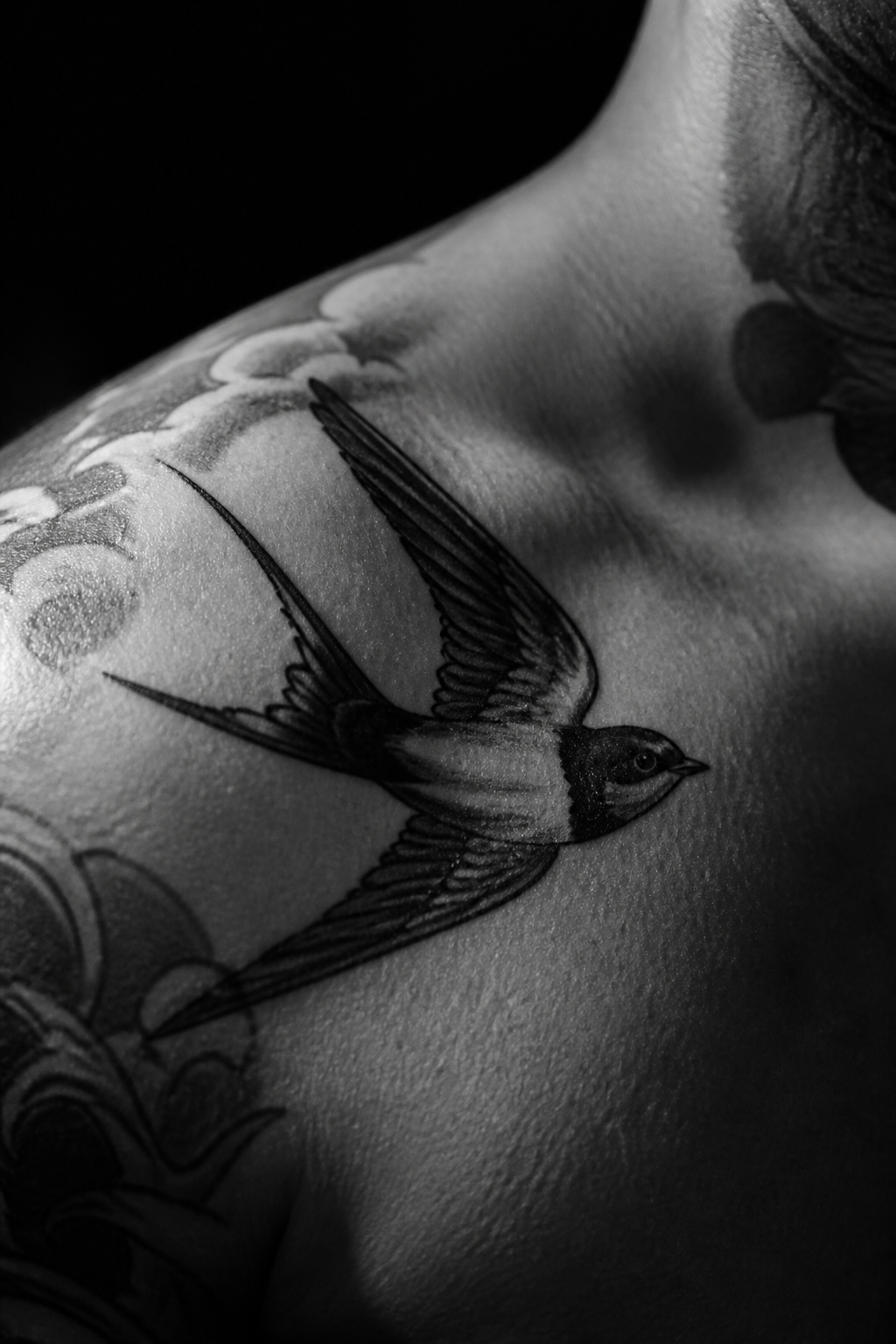
The swallow is one of the most enduring icons in the world of ink, rooted deeply in the maritime traditions of the early 20th century. Originally, a sailor would earn a swallow tattoo for every 5,000 nautical miles traveled. It served as a badge of experience and a symbol of the grueling life at sea, representing a successful journey and the hope of returning to solid ground. Since swallows are migratory birds that always return to their nests, they became synonymous with the concept of 'home.'
In the era of traditional American tattooing, popularized by legends like Sailor Jerry, the swallow took on a protective role. Legend suggested that if a sailor perished at sea, the swallows would carry their soul to heaven. This dual association with physical safety and metaphysical rest made it a staple in the flash sheets found in bustling port cities. It wasn't just decoration; it was a permanent talisman carried on the chest or hands of those facing the unpredictable ocean.
Today, the swallow tattoo meaning has evolved beyond the nautical mile markers of the past. Modern enthusiasts often choose this motif to represent personal liberation or the overcoming of a difficult period in life. Instead of literal sea miles, the bird now tracks the emotional distance traveled. It remains a favorite for those celebrating newfound independence or a significant transition, proving that the desire for freedom is a universal human experience.
Visually, the swallow has also seen a stylistic transformation. While the bold, black outlines and limited primary palettes of Traditional style remain a classic choice, we are seeing the bird reimagined through Neo-traditional and Fine Line lenses. These contemporary versions often incorporate softer gradients and more intricate feather detailing, allowing the wearer to customize the bird to match a more refined, modern aesthetic.
Regardless of the artistic execution, the core sentiment remains unchanged: the swallow is a tribute to the resilient spirit. Whether it’s placed on the collarbone, the back of the hand, or the ribs, it acts as a reminder that no matter how far one wanders, there is always a path back to oneself. It is a design that bridges the gap between old-school grit and new-school storytelling.