Sculpting the Leg: A Guide to the Thigh Tattoo Placement
7 days ago
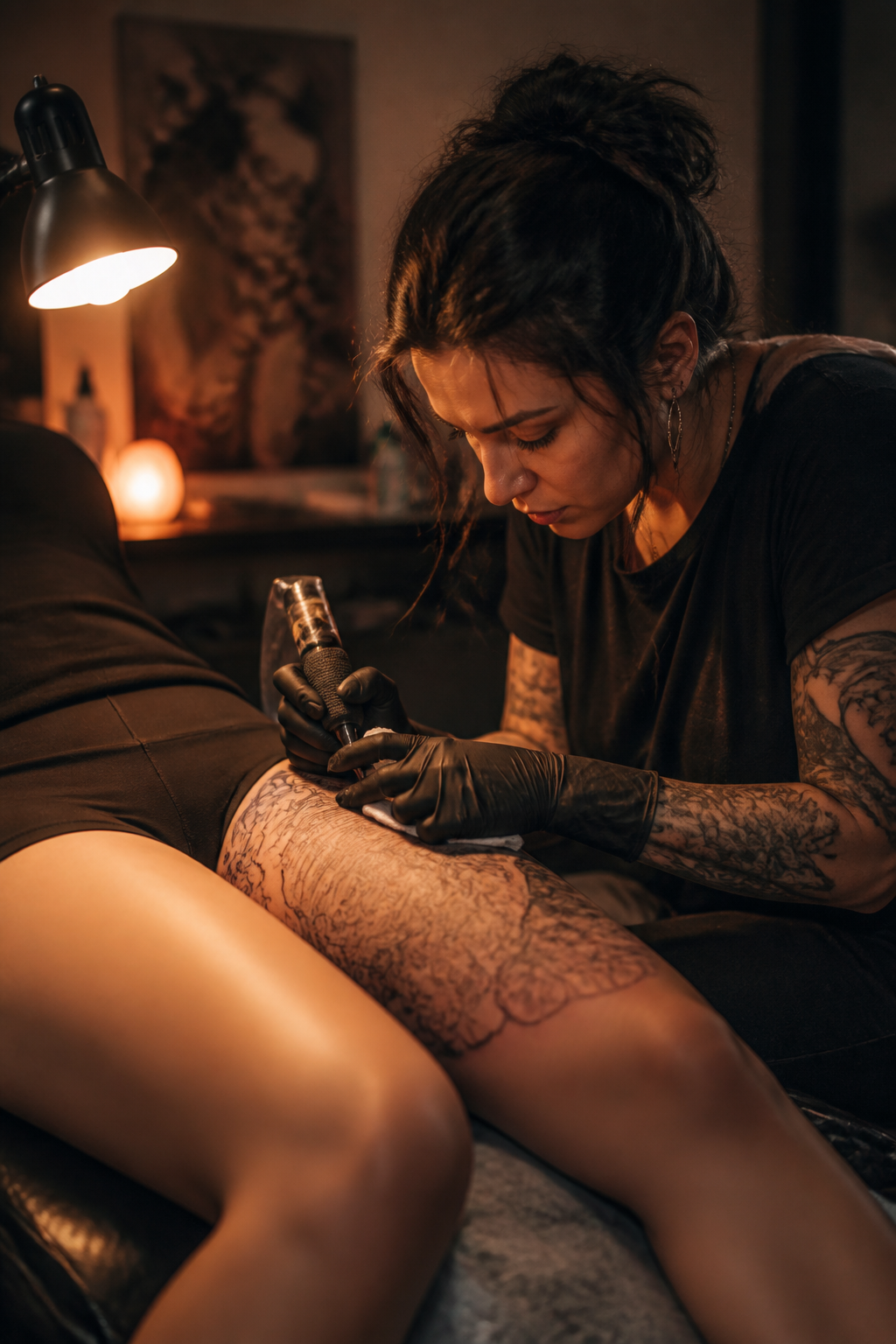
The thigh has long been a favorite for collectors looking for a large canvas that offers both privacy and visibility. As a tattoo placement, it provides one of the flattest and most expansive areas on the body, making it ideal for intricate portraits or bold illustrative work. Whether you choose the outer, front, or inner thigh, the muscle structure here supports heavy saturation and fine detail with ease.
Regarding the pain scale, the outer thigh is widely considered one of the least painful areas to get inked. The thick skin and underlying muscle act as a natural cushion against the needle. However, be prepared for a shift in sensation as the artist moves toward the inner thigh or the crease of the hip, where the skin becomes thinner and nerve endings are more concentrated.
Designing for this specific body curve requires an understanding of how the leg moves. A great design should wrap slightly to complement the natural musculature rather than fighting against it. Vertical compositions work best here, as they elongate the leg and maintain their integrity even when you are walking or sitting down. Always ask your artist to check the stencil while you are standing to ensure the proportions look correct in a natural posture.
In terms of aging, this area is highly resilient. Because the thigh is frequently covered by clothing, the skin is shielded from the damaging effects of UV rays, which is the primary cause of tattoo fading. This protection helps maintain sharp lines and vibrant colors for decades. As long as you maintain a consistent moisturizing routine, a piece in this location will likely outlast tattoos on more exposed areas like the hands or forearms.
Healing a large leg piece does come with unique challenges, primarily due to friction from clothing. During the first week, it is wise to wear loose-fitting fabrics like silk or wide-leg cotton trousers to avoid irritating the fresh ink. Avoid tight denim or leggings that might stick to the healing site, and ensure you are not sitting for extended periods in a way that puts direct pressure on the new work.
Ultimately, choosing this location allows for a level of creative freedom that few other spots provide. It is a versatile zone that works for both standalone pieces and the start of a full leg sleeve. By respecting the natural contours of the quadriceps and planning for the long-term durability of the skin, you can ensure your artwork remains a striking focal point for a lifetime.