
Rise and Radiate: Exploring the Modern Phoenix Tattoo Meaning
2 months ago
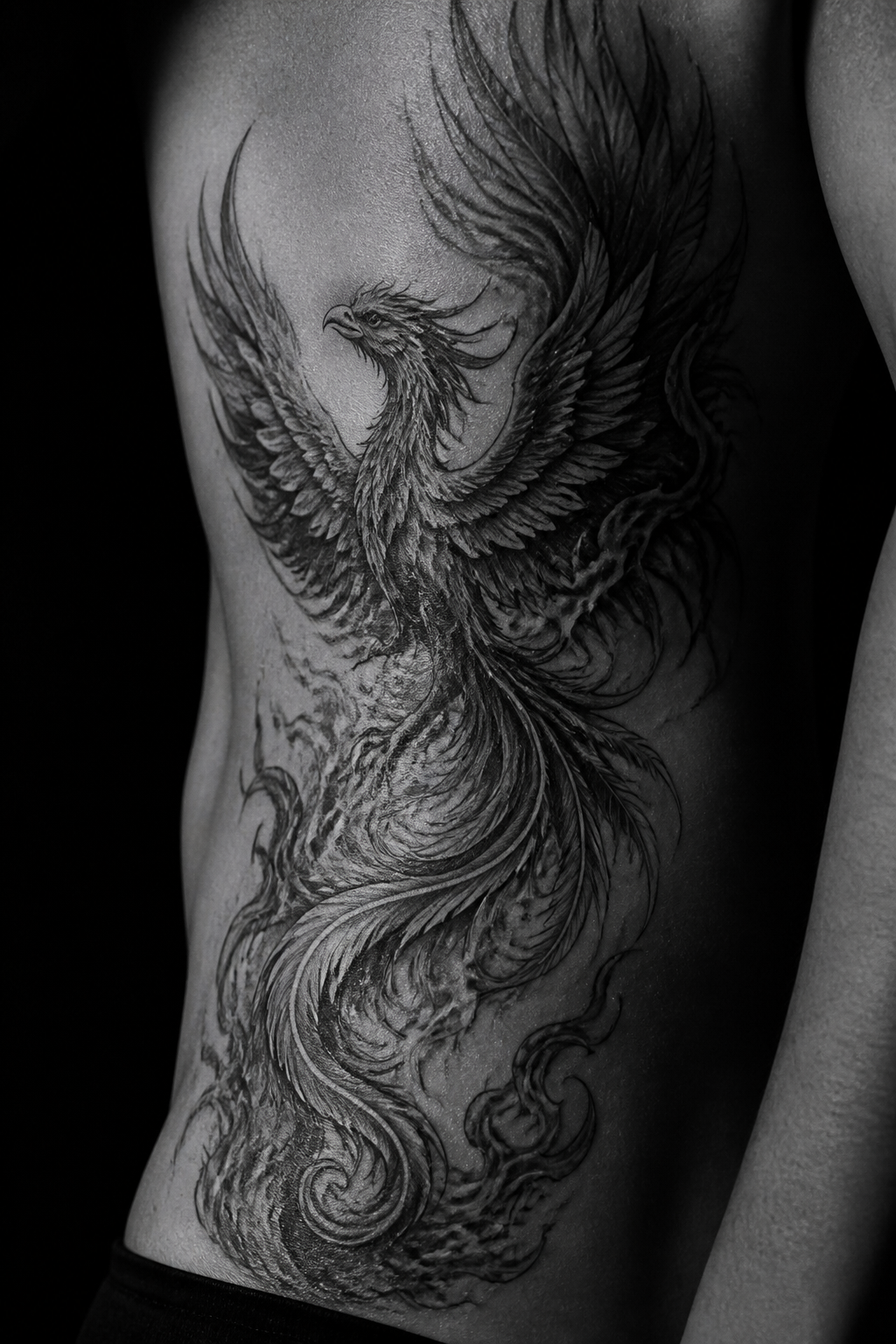
The phoenix is one of the most enduring symbols in the world of skin art, representing the cycle of destruction and reconstruction. Originally rooted in Greek and Persian mythology, the fiery bird was said to live for centuries before bursting into flames and emerging renewed from its own ashes. Today, the phoenix tattoo meaning remains centered on this idea of resilience, serving as a permanent badge for those who have overcome significant life challenges.
Historically, the phoenix appeared in early maritime and classical art, but it has found a permanent home in nearly every contemporary style. From the bold, saturated reds of American Traditional to the sweeping, fluid brushstrokes of Japanese Irezumi, the motif adapts to fit the wearer’s aesthetic. While the visual representation varies, the core message of invincibility and a fresh start stays consistent across cultures.
Modern wearers often reinterpret the phoenix as a signifier of personal growth rather than just a mythological creature. It is a popular choice for marking the end of a difficult chapter, such as a career change or a recovery from injury. Collectors frequently place these designs on the back or ribs, allowing the wings to wrap around the torso, physically mirroring the concept of a protective, transformative shield.
Choosing a phoenix allows for immense creative freedom with color and movement. Some prefer a minimalist approach with fine-line blackwork that focuses on the silhouette, while others opt for a vibrant palette to emphasize the fire-and-ash dynamic. Regardless of the stylistic execution, the phoenix tattoo meaning continues to resonate as a powerful declaration that no matter how many times we fall, we have the internal strength to rise again.