Raw Power and Rebellion: How Punk Rock Redefined Tattoo Culture
11 days ago
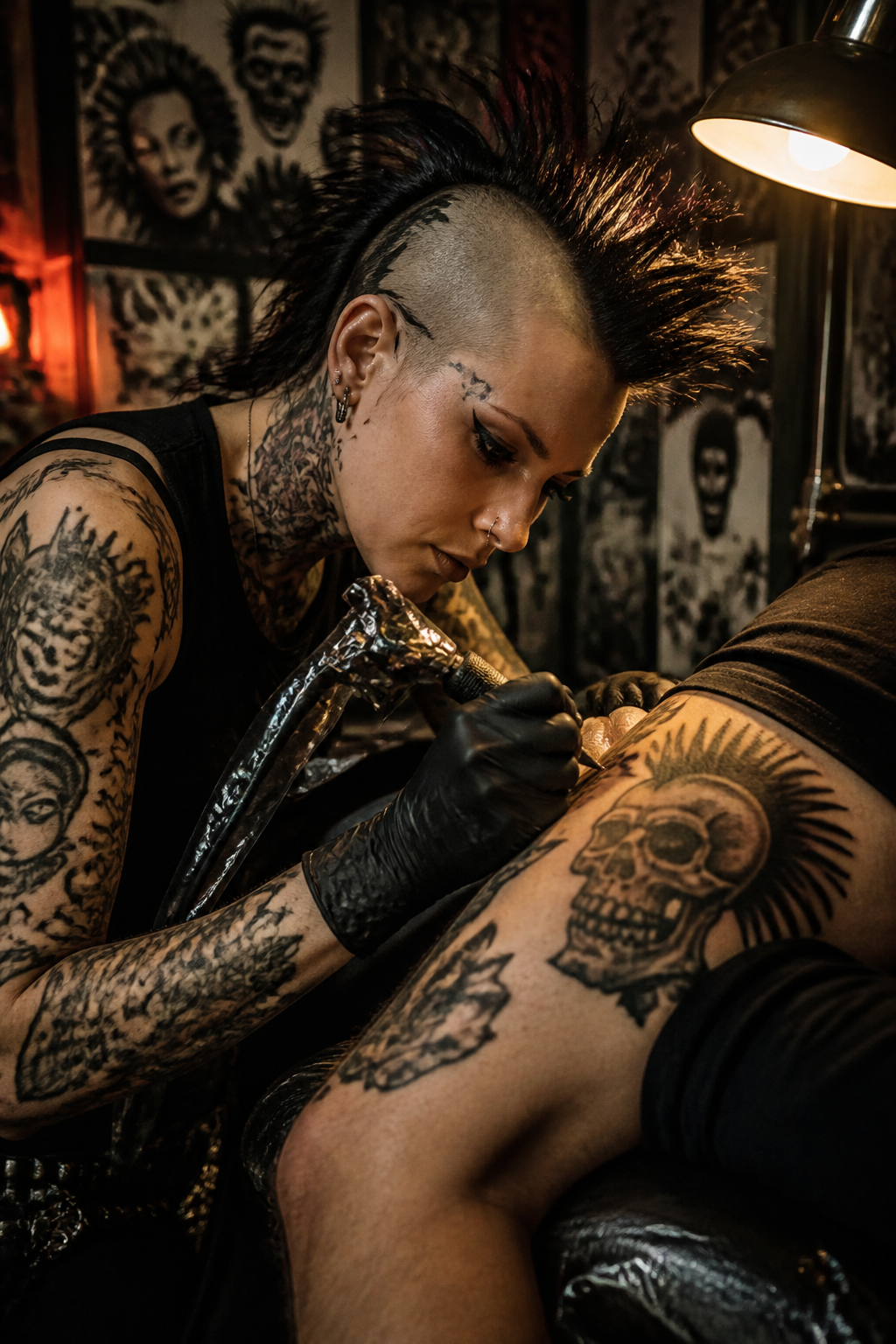
Long before the days of luxury private studios and celebrity artists, the underground punk scene was the primary laboratory for modern body art. In the late 1970s and early 80s, the boundary between the stage and the street blurred, leading to a massive shift in how people viewed permanent markings. Tattoo culture shifted from being a strictly maritime or military tradition into a loud, visual protest against societal norms.
For the early punk pioneers, the quality of the line work mattered less than the message behind it. Scrawled lyrics, band logos, and political symbols were applied in damp basements and backstage rooms, creating a rough-around-the-edges aesthetic. This DIY spirit proved that you didn't need a massive budget to make a statement, democratizing the act of getting inked for a new generation of rebels.
This era also introduced the concept of the 'tatu' as a uniform for outcasts. Seeing a mohawked guitarist covered in jagged blackwork gave others the courage to wear their subculture on their skin. As the music grew louder and more aggressive, the imagery followed suit, favoring high-contrast designs that could be identified from across a crowded, sweaty mosh pit.
Today, we see the remnants of this movement in the popular 'ignorant style' and the rise of hand-poked techniques. What started as a middle finger to the establishment has been refined into a legitimate artistic movement, yet it still retains that original spark of non-conformity. The grit of the punk scene remains a foundational pillar for those who value authenticity above all else.
Ultimately, the intersection of music and ink created a legacy of total creative freedom. Modern tattoo culture owes its fearless nature to the kids who weren't afraid to pick up a machine and mark themselves as different. It serves as a reminder that the best art often comes from a place of genuine, unpolished passion.