
Precision Protocol: The Essential Guide to Tattoo aftercare
8 days ago
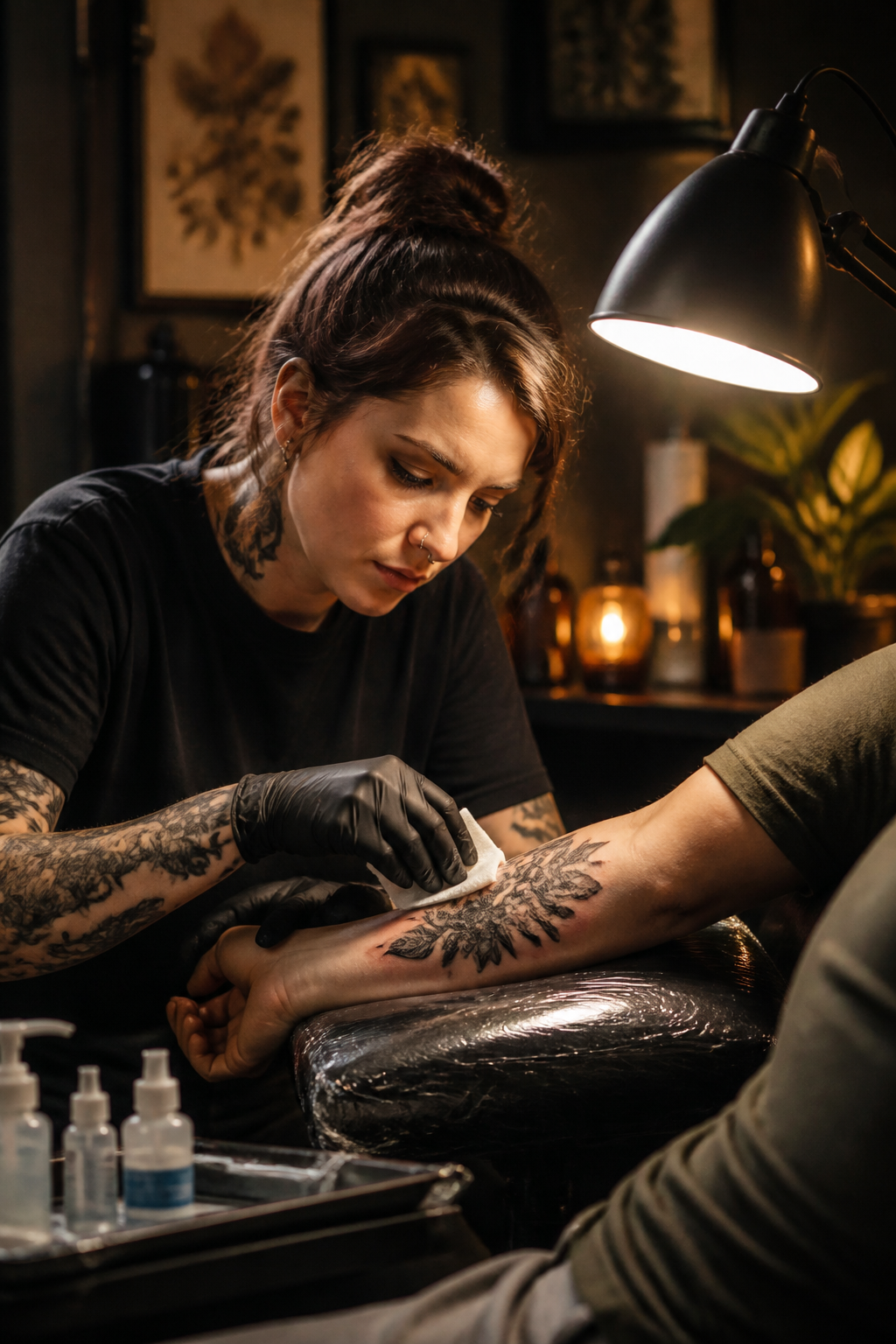
The first 48 hours are the most critical window for your new piece. Once you leave the studio, keep your artist's bandage on for the recommended time to shield the open skin from bacteria. When it is time to remove the wrap, wash the area gently with lukewarm water and a fragrance-free, antimicrobial soap using only your clean fingertips.
Moisturizing is the next pillar of successful Tattoo aftercare. After patting the area dry with a clean paper towel, apply a very thin layer of specialized ointment or unscented lotion. The goal is to keep the skin hydrated without suffocating it; applying too much product can trap bacteria and lead to breakouts or pulled pigment.
During the first two weeks, you must strictly avoid swimming and soaking in tubs. Submerging a fresh tattoo in chlorine or salt water introduces a high risk of infection and can cause the ink to leach out. Stick to short, cool showers and ensure the water stream doesn't hit the healing site directly with high pressure.
Sun exposure is the primary enemy of long-term vibrancy. While your tattoo is healing, keep it covered with loose, breathable clothing rather than sunscreen. Once the skin is fully closed and the peeling phase has ended—usually after three to four weeks—make high-SPF sunblock a permanent part of your daily routine to prevent fading.
The healing timeline varies by individual, but you can typically expect some light flaking or itching. Resist the urge to pick or scratch at scabs, as this leads to scarring and patchy color. Most tattoos are surface-healed within a month, though the deeper layers of skin continue to recover for several weeks after that.
Knowing when to call your artist is just as important as the cleaning process itself. If you notice extreme swelling, yellow discharge, or redness that spreads away from the design, reach out to your professional immediately. They can help you determine if the healing is on track or if you need to seek medical advice for a potential infection.