Precision Healing: A Realistic Routine for Tattoo aftercare
8 days ago
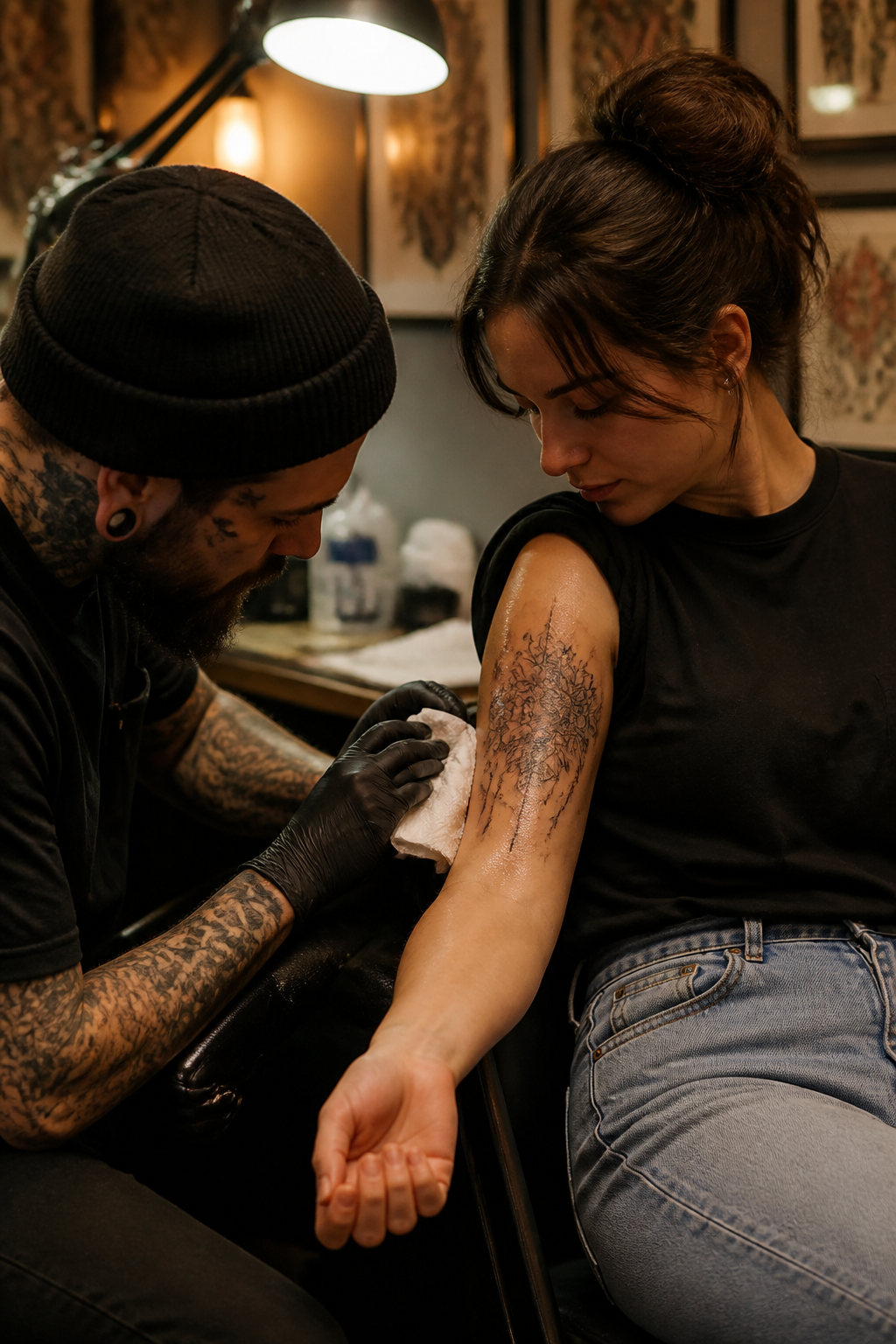
The first 48 hours are the most critical window for your new piece. Once you leave the studio, your primary goal is to keep the area clean and protected from external bacteria. If your artist applied a medical-grade adhesive bandage, leave it on for the recommended time. If they used traditional wrap, remove it within a few hours, gently washing the area with lukewarm water and a fragrance-free, antimicrobial soap to remove excess plasma and ink.
Washing is the foundation of successful tattoo aftercare. You should clean the site two to three times a day using only your clean fingertips—never use a washcloth or loofah, as these are too abrasive. After rinsing, pat the area dry with a fresh paper towel rather than a bathroom towel, which can harbor bacteria and lint. Maintaining this level of hygiene prevents the buildup of heavy scabs that could pull pigment from the skin.
Moisturizing requires a 'less is more' approach. Once the tattoo begins to feel tight or dry, apply a very thin layer of a specialized ointment or a plain, unscented lotion. The skin needs to breathe to heal, so avoid suffocating the pores with thick layers of petroleum-based products. If the tattoo looks shiny or greasy, you have applied too much and should gently dab away the excess with a clean tissue.
During the initial two-week healing phase, you must strictly avoid swimming and sun exposure. Submerging your ink in pools, hot tubs, or ocean water introduces a high risk of infection and can lead to premature fading. Similarly, UV rays are the enemy of fresh pigment. Since you cannot apply sunscreen to a healing wound, keep the area covered with loose, breathable clothing whenever you are outdoors to prevent blistering.
Expect a healing timeline that includes light peeling and itching, similar to a mild sunburn. It is vital that you do not pick or scratch at the flakes, as this can cause scarring or 'holidays'—gaps in the ink. Most surface healing is complete within three weeks, but the deeper layers of skin can take up to several months to fully recover and settle into their permanent tone.
Knowing when to contact your artist or a professional is key to a safe recovery. While some redness and swelling are normal for the first few days, you should reach out if you notice spreading redness, foul odors, or yellow discharge. A reputable artist wants your piece to heal perfectly and will be happy to advise you if you are unsure about how your skin is responding to the process.