Precision and Flow: A Dotwork Tattoo Styles Guide
9 days ago
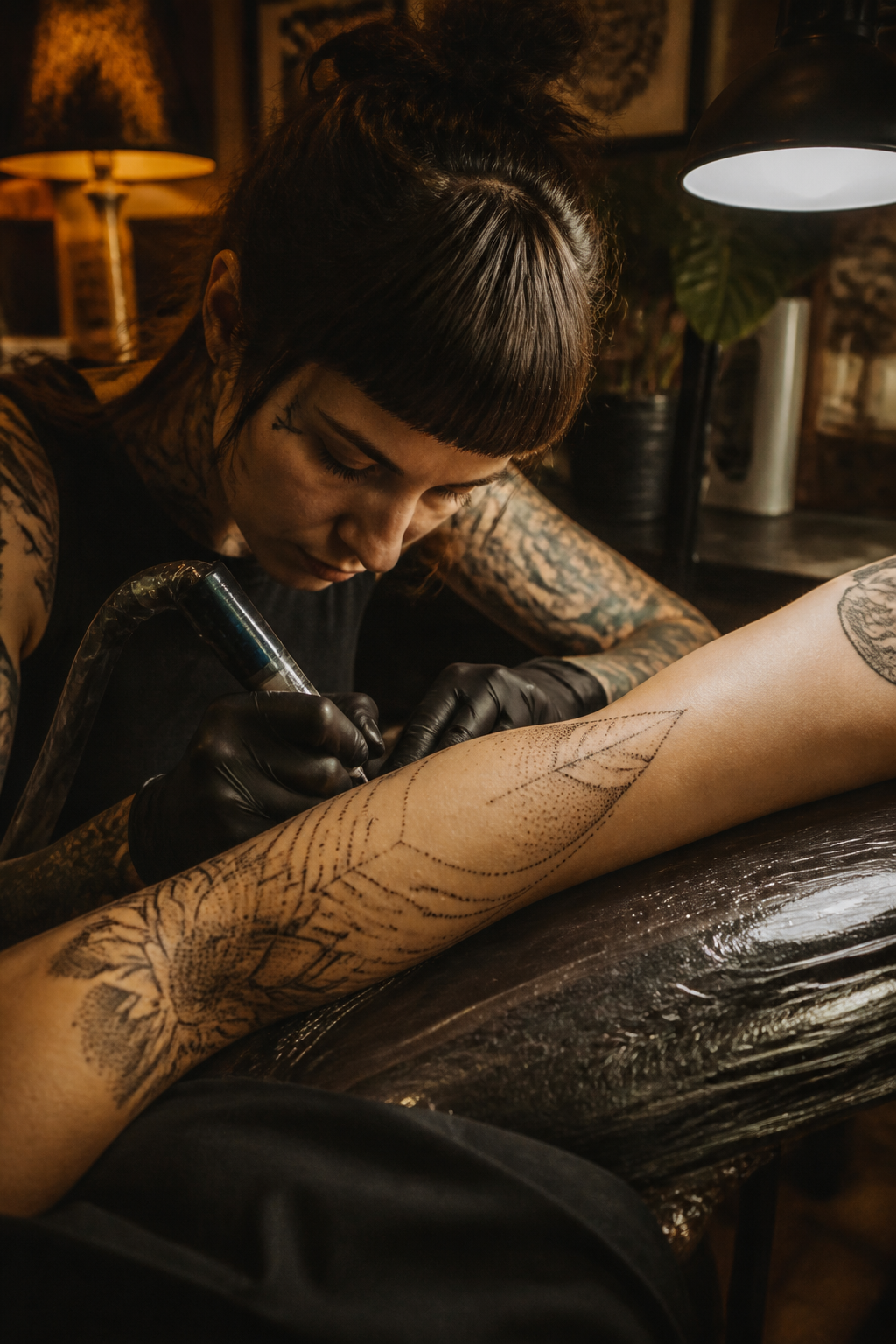
Dotwork has emerged as a powerhouse in modern tattooing, moving away from solid blocks of pigment to create imagery through millions of tiny, individual points. This technique, often referred to as stippling, relies on the proximity of dots to build contrast, shading, and texture. Unlike traditional shading methods that use smooth gradients, dotwork offers a unique, grainy aesthetic that feels both organic and mathematically precise.
The origins of this style trace back to ancient hand-poked traditions, but the contemporary movement was solidified by pioneers like Xed LeHead and Thomas Hooper. These artists pushed the boundaries of what could be achieved with a single needle, proving that complexity doesn't always require heavy saturation. Today, dotwork is a cornerstone of the blackwork movement, favored for its ability to age gracefully compared to softer, wash-based shading.
What makes this entry in our tattoo styles guide so recognizable is the sheer technical discipline required. Artists must maintain consistent depth and spacing to ensure the dots don't blur together over time. This mastery is most visible in mandalas, geometric patterns, and botanical illustrations where the 'peppered' look adds a three-dimensional quality that looks as if it were printed onto the skin.
Choosing dotwork also offers a different experience for the client. Many find the sensation of stippling less intense than the dragging motion of a traditional shading needle. Furthermore, the aesthetic versatility is unmatched; it can be used to create hyper-realistic portraits or minimalist landscapes, making it a top recommendation for those seeking a sophisticated and enduring piece of body art.