Precision and Elegance: A Fineline Tattoo Styles Guide
2 days ago
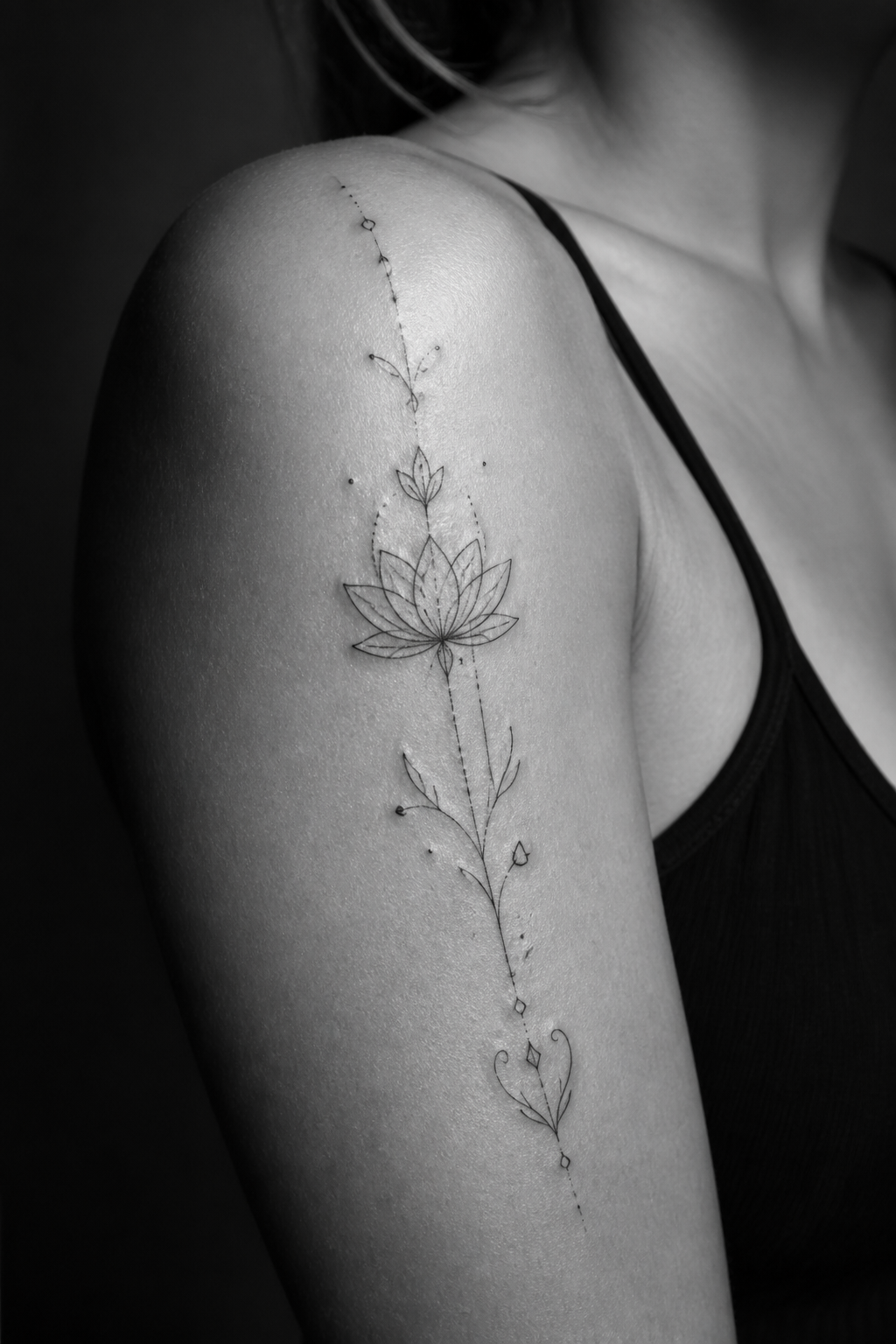
Fineline tattooing has transformed from a niche technique into a global powerhouse of modern aesthetics. Characterized by incredibly thin, crisp lines and a delicate touch, this style relies on the use of single or low-count needle groupings. Unlike the heavy outlines of traditional work, fineline focuses on grace and subtlety, allowing for intricate details that appear almost weightless on the skin.
The origins of this movement can be traced back to the legendary 'Black and Grey' revolution in Los Angeles during the late 1970s and 80s. Pioneers like Freddy Negrete and Mark Mahoney moved away from bold, thick lines to create portraits and designs that mimicked the look of pencil drawings. This shift opened the door for a new generation of artists to explore hyper-detail on a smaller scale.
What makes this entry in our tattoo styles guide so recognizable is its use of negative space and soft shading. Artists like Dr. Woo have popularized the 'Single Needle' approach, creating complex geometric structures and celestial maps that feel like fine jewelry. The hallmark of a great fineline piece is its clarity; every stroke must be deliberate because there is no thick ink to hide behind.
Technique is paramount in this genre. Because the lines are so thin, the artist must have a steady hand and a deep understanding of skin depth. If the needle goes too deep, the line 'blows out' and loses its sharpness; too shallow, and the ink won't hold. It is a balancing act that requires years of specialized practice to master.
Today, fineline is the go-to choice for those seeking minimalist designs or botanical illustrations. From tiny micro-portraits to sprawling floral arrangements that flow with the body’s natural curves, the versatility of the style is unmatched. It offers a sophisticated alternative for collectors who want their ink to feel like a whisper rather than a shout.