
Minimalist Marks: Tiny Ankle Tattoo Ideas for Your First Piece
9 days ago
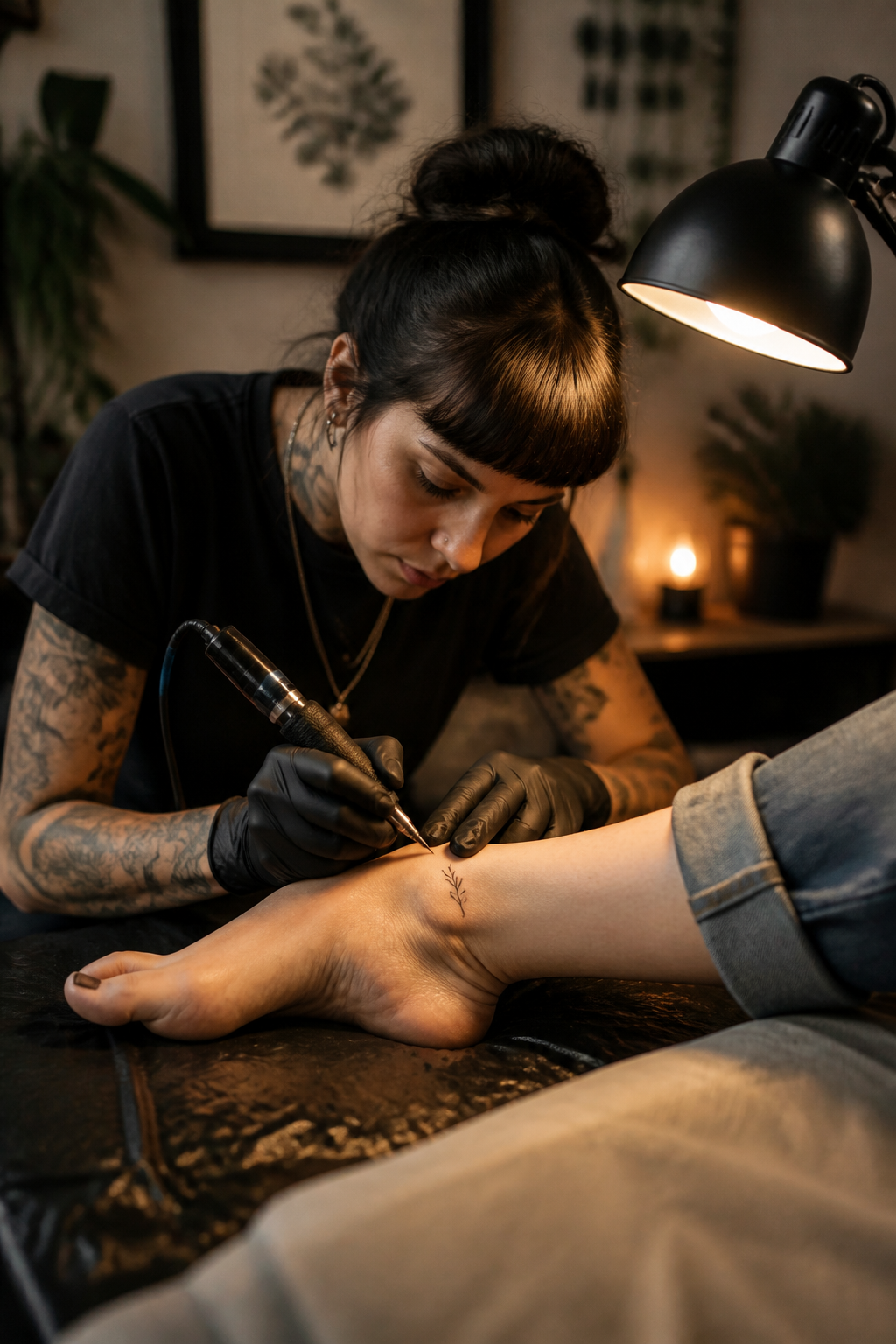
The ankle has long been a favorite spot for those seeking a balance between visibility and discretion. As a placement, it allows you to showcase your art during the summer months while easily tucking it away under trousers or boots for professional settings. For a first-timer, the ankle provides a sturdy canvas that ages remarkably well if the design is kept clean.
When brainstorming tattoo ideas for this area, minimalist linework is currently leading the pack. Think thin-gauge needles creating single-stroke silhouettes of natural elements like mountain ranges or ocean waves. These designs wrap around the contours of the bone, creating a dynamic look that moves naturally with your body. The lack of heavy shading ensures the piece remains crisp over time.
Micro-lettering is another excellent choice for the lower leg. Short, impactful words or significant dates rendered in a typewriter font offer a sophisticated touch. Because the skin on the ankle is relatively thin, choosing a font with generous kerning ensures that the ink doesn't blur into a dark smudge as the years pass. Keep it simple and let the negative space do the heavy lifting.
For those who prefer a bit of whimsy, small geometric shapes or abstract dots can act as modern jewelry. A series of three ascending dots or a perfectly centered triangle can create an edgy, contemporary vibe without the commitment of a large-scale piece. These accents are easy to hide but provide a sharp, intentional look when paired with low-top sneakers.
If you are honoring a specific memory, consider botanical sketches. A single sprig of lavender or a tiny olive branch can be tucked behind the lateral malleolus for a hidden gem effect. The natural curves of leaves complement the anatomy of the foot, making the artwork feel like a natural extension of your frame rather than a flat image slapped onto the skin.
Ultimately, the best tattoo ideas for the ankle are those that respect the small scale of the placement. By focusing on high-contrast linework and avoiding overly dense clusters of detail, you ensure your ink remains a sharp, readable statement piece for decades to come. Consult with a fine-line specialist to ensure your chosen design is optimized for this specific area.