Mastering the Shadow: How a Successful Tattoo Cover-Up Really Works
11 days ago
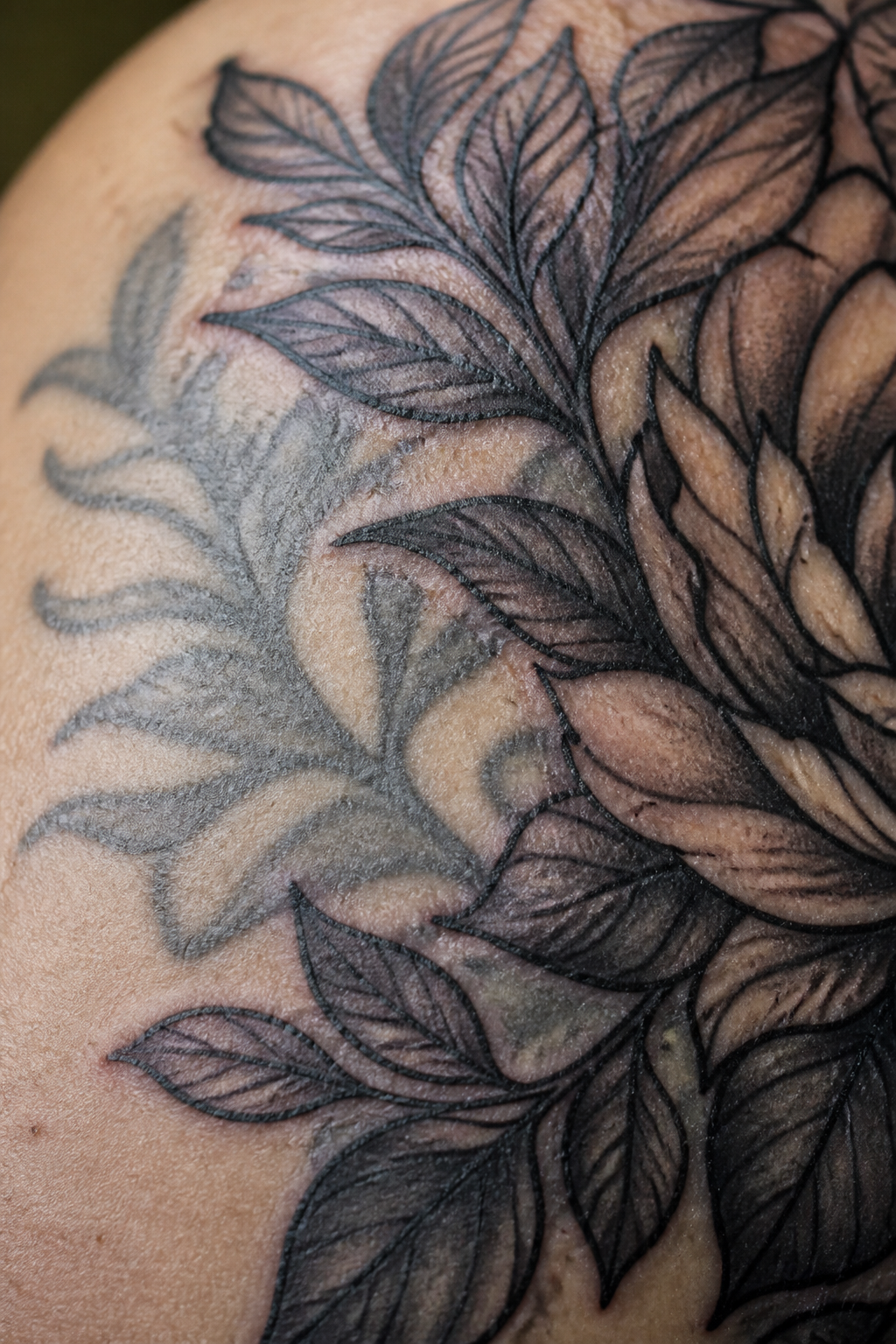
A professional tattoo cover-up is less about hiding a mistake and more about an advanced exercise in color theory and visual camouflage. Many clients assume a new design simply acts like a layer of opaque paint, but tattoo ink is translucent. The old pigment sits beneath the skin, meaning the new art must work with the existing dark tones rather than just sitting on top of them.
Design strategy is the most critical element of a successful project. To effectively mask an old piece, artists often utilize high-contrast imagery, dense textures, and organic shapes. Cold colors like deep blues, violets, and forest greens are typically more effective at neutralizing old black ink than warmer tones like yellow or red, which often allow the old lines to ghost through.
Sometimes, the existing ink is too dark or saturated for a direct solution. In these cases, a few sessions of laser fading are recommended before starting the tattoo cover-up. Lightening the old pigment expands your design options significantly, allowing for more negative space or lighter color palettes that wouldn't be possible over a stark, solid black piece.
Selecting the right artist is the final piece of the puzzle. Not every talented illustrator is skilled in the specific mechanics of concealment. Look for a specialist who understands how to lead the viewer’s eye away from the old boundaries using flow and composition. A true expert will prioritize the longevity of the new piece, ensuring the old ink stays hidden for years to come.