Mastering the Monochrome: The Blackwork Chapter of Our Tattoo Styles Guide
3 months ago
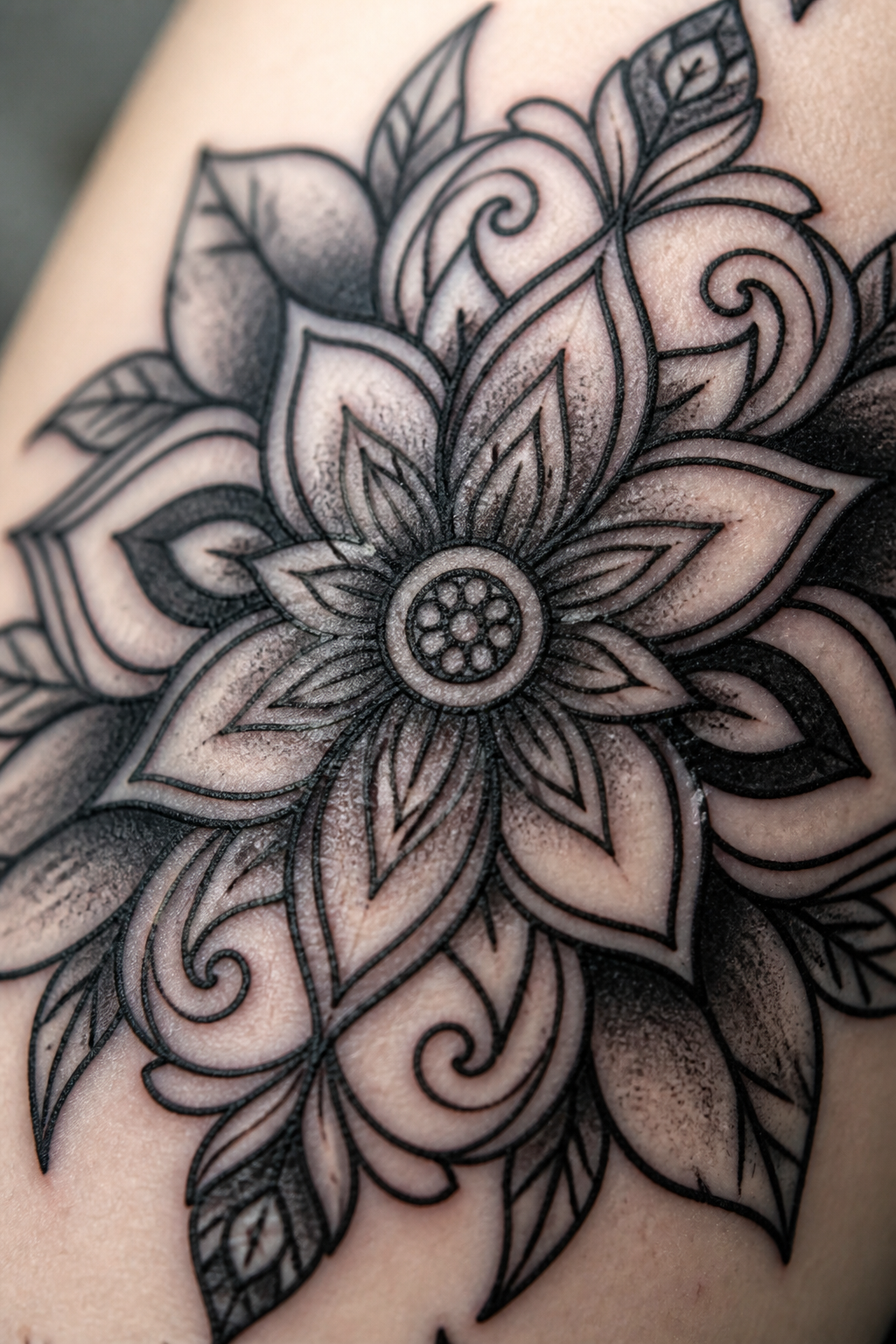
Blackwork stands as one of the most unapologetic entries in any tattoo styles guide. Defined by the exclusive use of saturated black ink, this aesthetic eschews gradients and color palettes in favor of stark contrast. Whether it is a solid blackout sleeve or intricate patterning, the style relies on the negative space of the skin to create depth and visual impact.
The origins of blackwork are deeply rooted in ancient Polynesian and various indigenous marking traditions. Modern artists have taken these ancestral concepts of bold geometry and adapted them into contemporary contexts. Historically, these markings were used to signify status or lineage, but today they serve as a powerful medium for personal expression and body flow.
What makes blackwork instantly recognizable is its structural integrity. Unlike styles that rely on soft shading to mimic reality, blackwork uses solid blocks of pigment and sharp, clean lines. Artists like Thomas Hooper and Xed LeHead helped pioneer the modern movement, pushing the boundaries of what could be achieved with single-needle precision and heavy-duty shading tools.
For those looking to commit to this style, longevity is a major benefit. Because black pigment holds its saturation better than lighter hues or pastels, these pieces tend to age incredibly well. However, the process requires a high level of technical skill; there is no room to hide mistakes when working with such high-contrast elements.
Contemporary blackwork has branched out into various sub-genres, including dark illustrative and ornamental styles. Some collectors prefer heavy saturation that acts as a physical silhouette, while others lean toward delicate linework that mimics Victorian engravings. Regardless of the sub-genre, the focus remains on the purity of the black ink.
When planning your next piece, understanding the technical demands of blackwork is essential. Because it involves large areas of solid saturation, sessions can be intense, but the result is a timeless, high-impact aesthetic that remains a staple of the global tattooing community.