
Mastering the Monochrome: A Blackwork Tattoo Styles Guide
7 days ago
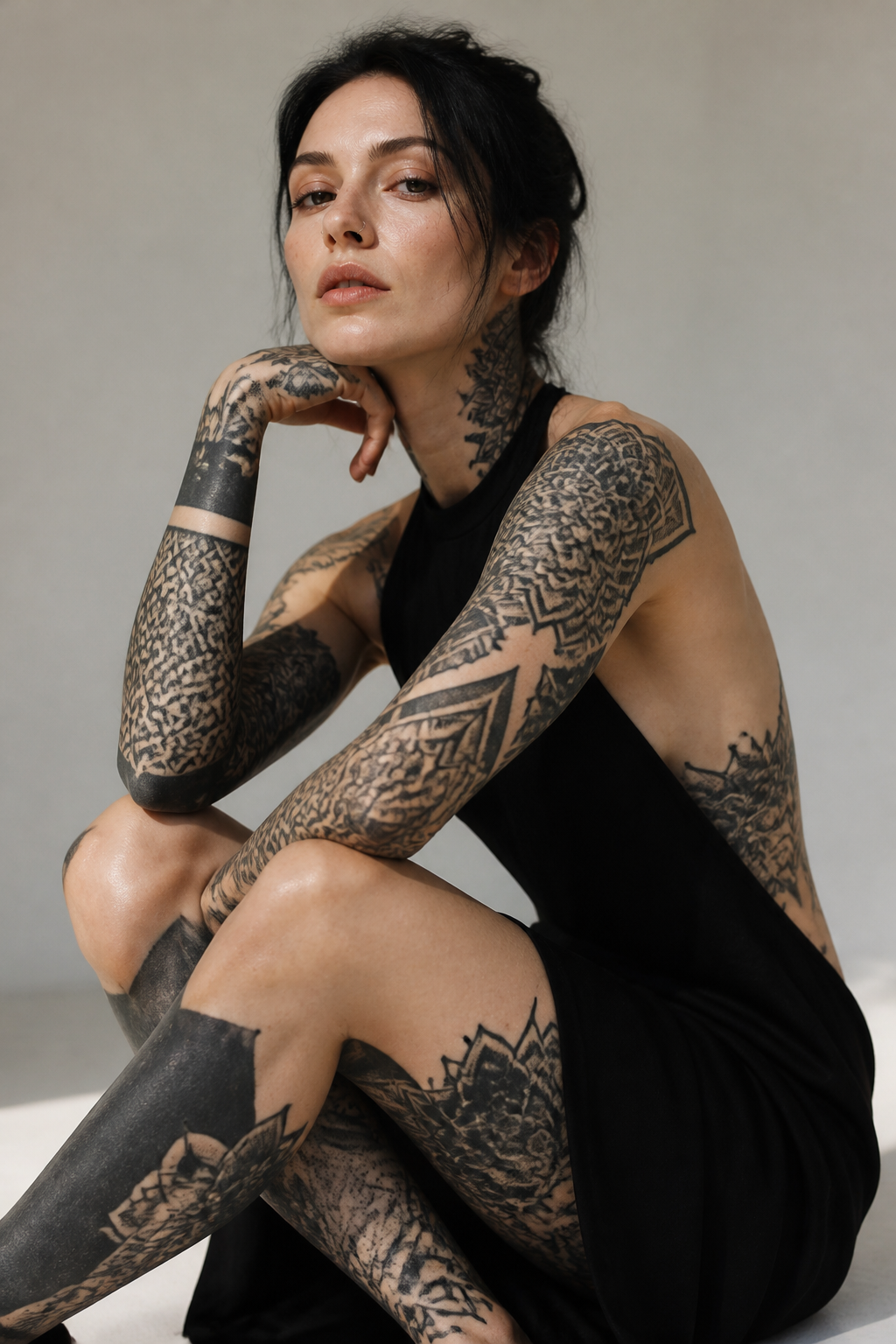
Blackwork is perhaps the most striking entry in any tattoo styles guide, defined by its exclusive use of carbon-black ink without a single drop of color or gray shading. While its roots trace back to ancient Polynesian and tribal traditions, the modern iteration of blackwork has transformed into a sophisticated movement that prioritizes bold geometry and heavy saturation. Unlike other genres that rely on subtle gradients, this style uses the natural skin tone as the only highlight against deep, obsidian voids.
What makes blackwork instantly recognizable is the sheer density of the pigment. Modern masters like Hoode and Hanumantra have pushed the boundaries of this style, moving away from simple shapes toward large-scale ornamental patterns that flow with the body’s natural musculature. It is a style that demands confidence, as the thick linework and solid fill leave no room for error, creating a visual impact that is visible from across a room.
Beyond simple shapes, the style has branched into several sub-genres. You will often see 'blackout' work, which involves covering entire limbs in solid ink, or 'engraving' style, which mimics the look of old woodcut prints with fine, parallel lines. The versatility is endless, ranging from delicate botanical silhouettes to aggressive, jagged architectural shapes. It is the ultimate choice for collectors who value high contrast and a timeless, graphic aesthetic.
Technically, blackwork requires a different approach than realism or traditional styles. Artists often use specialized large-grouping needles to pack the pigment evenly, ensuring the black remains rich and dark as it heals. Because there are no colors to fade, these pieces tend to age exceptionally well, maintaining their sharp edges and deep tones for decades. If you are looking for a piece that makes a powerful statement through simplicity, blackwork is the gold standard of the industry.