
Mastering the Flow: A Japanese Irezumi Tattoo Styles Guide
2 days ago
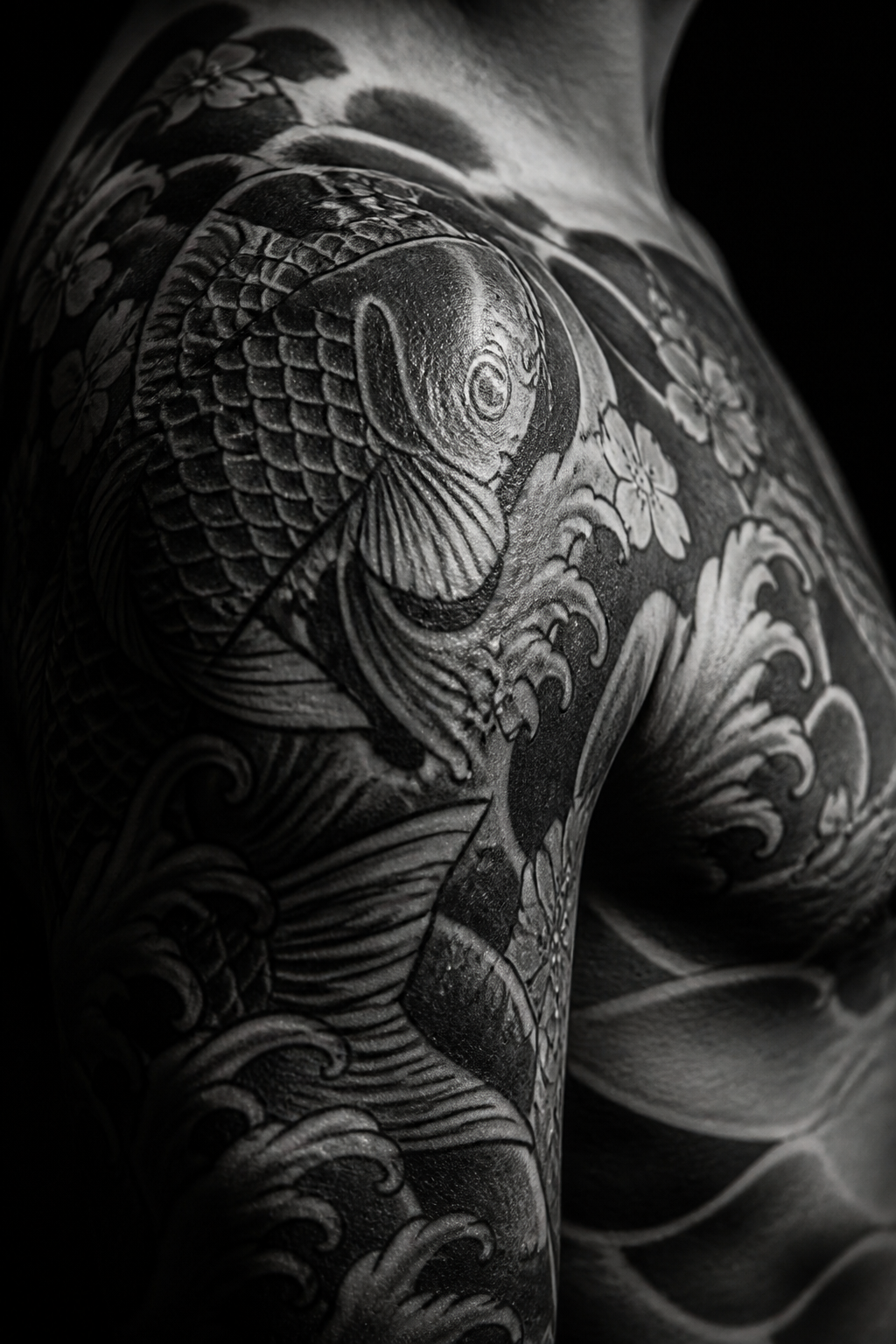
Irezumi is perhaps the most iconic entry in any tattoo styles guide, defined by its massive scale and deep roots in the Edo period. Unlike modern flash, this style focuses on the body as a whole canvas, using large-scale compositions known as 'Gakuburi' to frame the primary subjects. The style evolved from the woodblock prints of the Ukiyo-e era, translating intricate paper stories into permanent pigment.
What makes this style instantly recognizable is the balance between foreground and background. Heavy black wind bars, crashing waves, and cherry blossoms aren't just filler; they provide the structural rhythm that connects separate pieces into a cohesive bodysuit. The use of negative space and bold, saturated colors creates a visual impact that remains legible even decades after the initial session.
Horiyoshi III is often cited as a legendary master who preserved the traditional hand-poked 'Tebori' technique while influencing the global perception of Japanese art. Today, contemporary artists blend these ancient rules with modern machine techniques, but the core principles remain the same. The focus is always on movement and how the art interacts with the natural musculature of the wearer.
From the fierce imagery of the Hannya mask to the resilience of the Koi fish, every element in this style serves a narrative purpose. Because of the complexity involved, starting a Japanese-inspired project requires a long-term commitment. This tattoo styles guide entry serves as a reminder that Irezumi isn't just a collection of small pieces, but a lifetime investment in a singular, flowing masterpiece.