
Mastering the Dark: The Blackwork Chapter of Our Tattoo Styles Guide
2 months ago
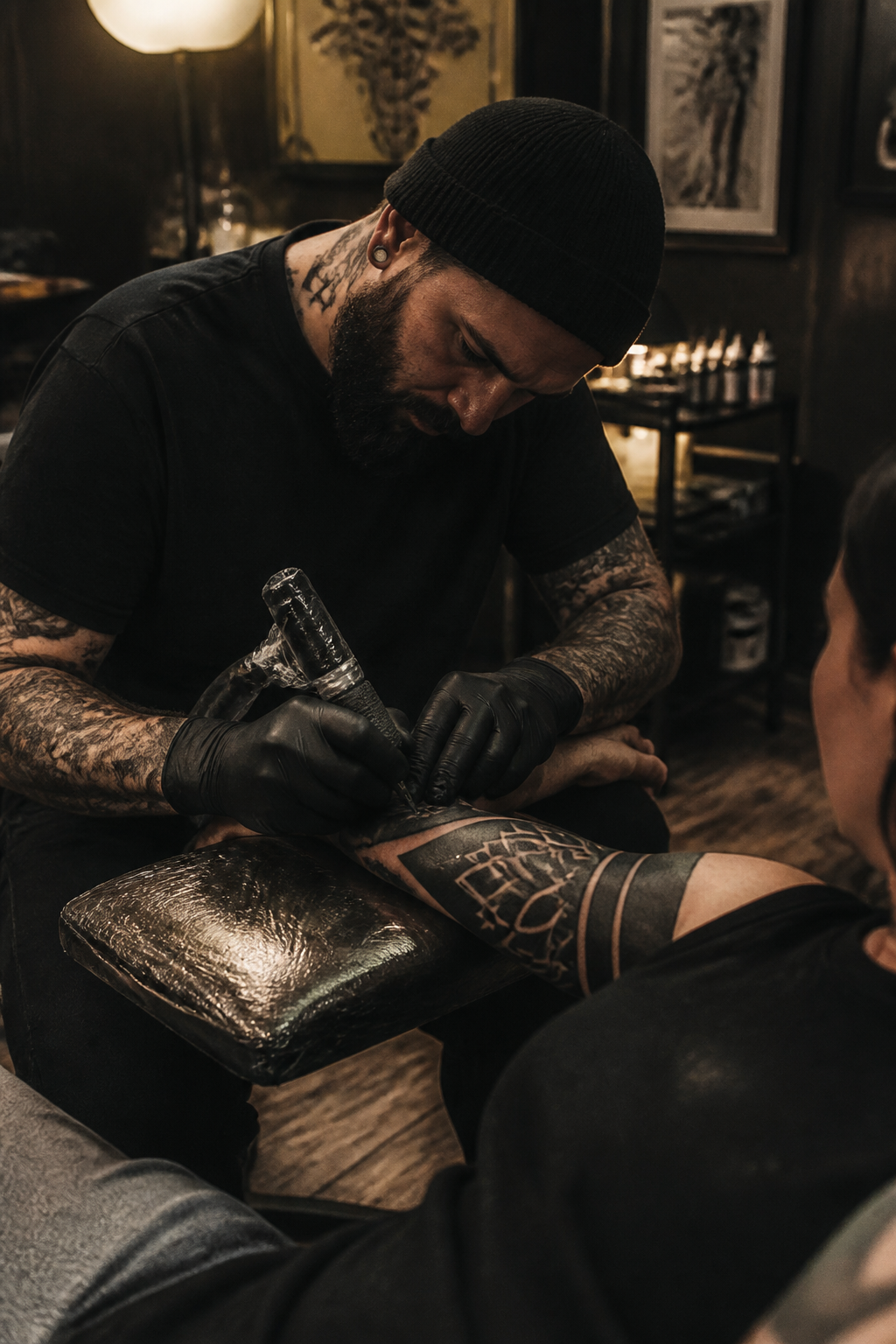
Blackwork is perhaps the most visceral entry in any tattoo styles guide, defined by its absolute commitment to high-contrast imagery and heavy black saturation. While many styles rely on a full spectrum of color or smooth gray shading, blackwork uses the absence of light to create depth. It is a bold, uncompromising approach that transforms the skin into a high-definition graphic canvas.
The origins of blackwork are rooted in ancient tribal traditions, but the modern iteration has evolved into a sophisticated subculture. Artists like Roxx and Hanumantra have pioneered the movement, pushing the boundaries of how large-scale black ink can contour the human anatomy. Whether it is massive solid blocks of ink or intricate geometric patterns, the style focuses on structural integrity over delicate detail.
What makes blackwork instantly recognizable is the 'solid' factor. You won't find soft gradients or realism here; instead, you see sharp linework and deep, opaque fills. This style often incorporates elements of 'blackout' tattooing, where large areas of the body are covered in pure pigment to create negative space designs that pop against the skin.
Durability is the greatest strength of this style. Because black pigment is the most stable and long-lasting ink available, blackwork pieces tend to age better than almost any other category in a tattoo styles guide. They resist fading and maintain their clarity for decades, making them a favorite for collectors who want a piece that remains striking from youth into old age.
Choosing blackwork requires a certain level of commitment, as the heavy saturation makes these pieces difficult to laser or cover later. It is a style for the bold, prioritizing silhouette and flow over narrative. For those looking to make a powerful statement with their ink, nothing commands attention quite like the stark, rhythmic power of a well-executed blackwork composition.