
Mastering Negative Space: The Blackwork Tattoo Styles Guide
2 months ago
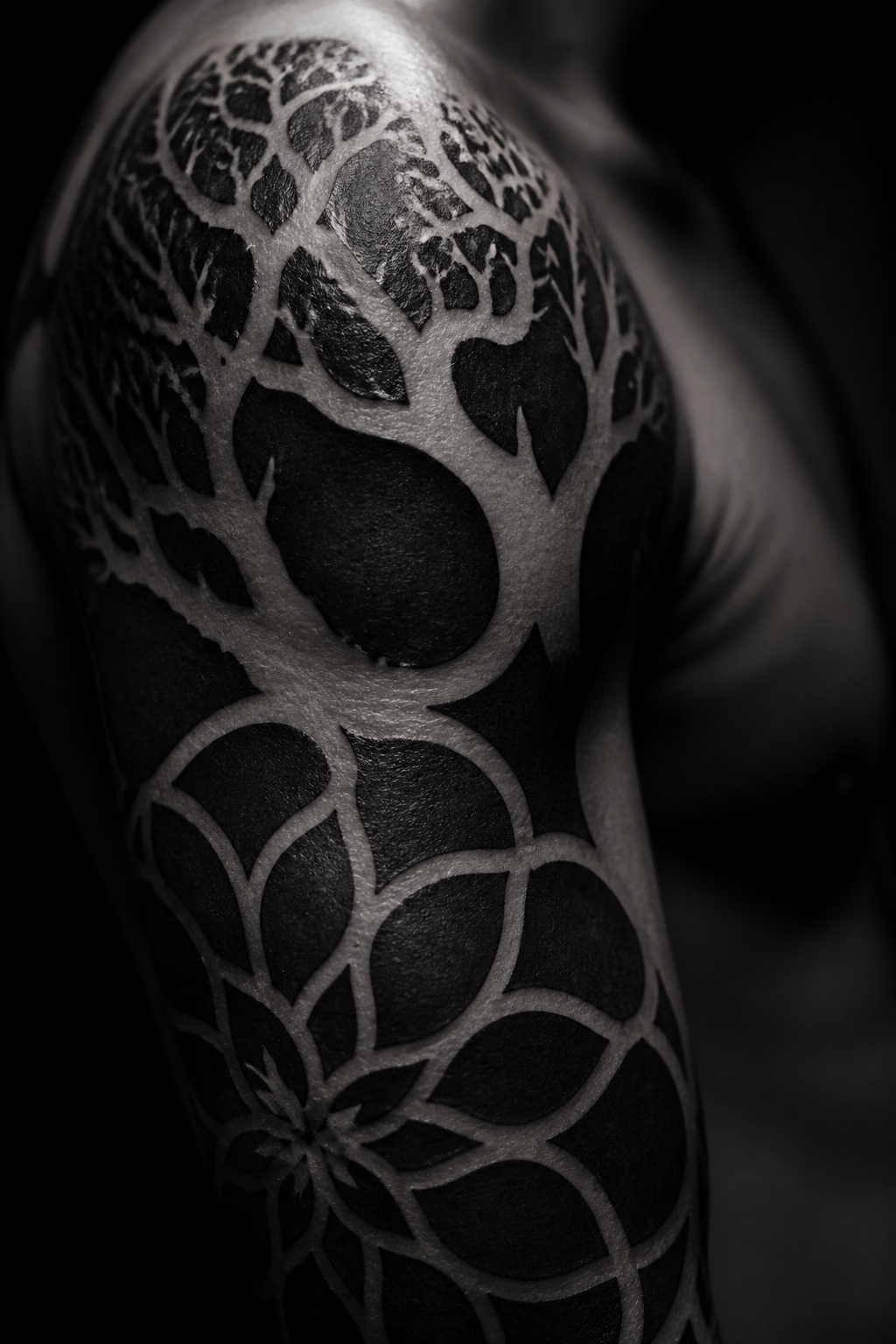
Blackwork represents one of the most striking chapters in any tattoo styles guide. Defined by its exclusive use of solid black ink, this aesthetic eschews color and shading gradients in favor of high-contrast saturation. While it draws inspiration from ancient tribal traditions across the South Pacific, modern blackwork has evolved into a sophisticated urban movement that emphasizes the contrast between dark pigment and the natural skin tone.
Key artists like Hanumantra Lamar and Roxy Velvet have pushed the boundaries of what large-scale black saturations can achieve. Their work often features heavy black sleeves or full-back pieces that use the body's natural silhouette to frame geometric shapes or solid panels. This style demands precision, as there is no color to hide behind; every line must be saturated perfectly to ensure the pigment remains deep and consistent after healing.
Recognizing blackwork is easy once you understand its core components. Look for 'bombing' techniques where massive areas of skin are filled with solid ink, or intricate linework that mimics engravings and woodcuts. It is a style of extremes, ranging from delicate illustrative patterns to the bold, heavy blocks of ink found in blackout tattoos, which are increasingly popular for their graphic, minimalist impact.
Beyond just aesthetics, blackwork is highly sought after for its durability. Unlike light watercolors or fine lines, heavy black pigment tends to hold its integrity better against UV exposure and aging. Whether you are looking for a small botanical silhouette or a full-body interlocking pattern, the blackwork style offers a timeless, powerful way to decorate the body with maximum visual gravity.