
Mastering Contrast: The Blackwork Tattoo Styles Guide
2 days ago
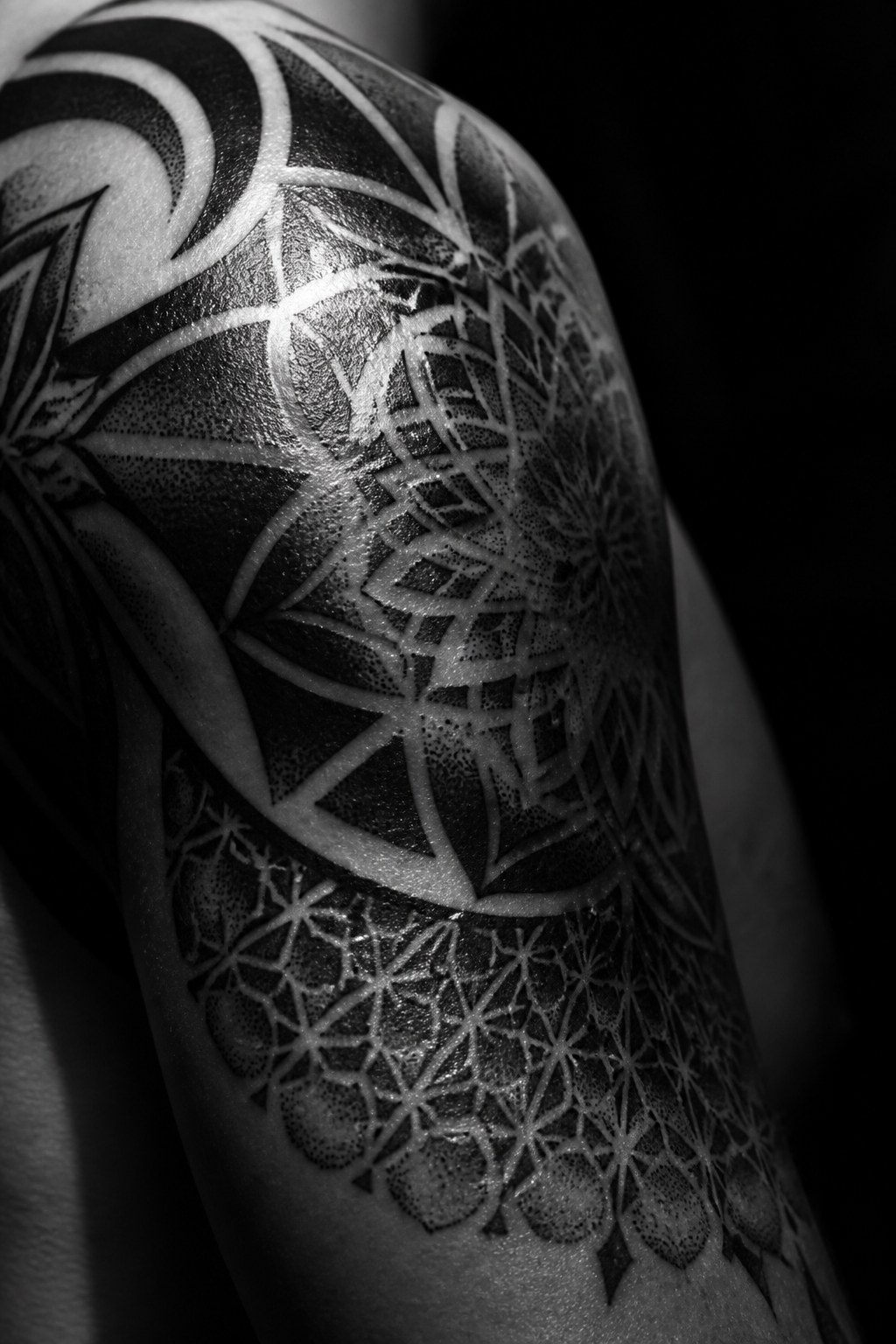
Blackwork stands as one of the most commanding categories in the industry, stripping away the distraction of color to focus entirely on composition and contrast. While many modern collectors associate it with heavy saturation, its roots reach back to ancient Polynesian and tribal traditions. In a contemporary tattoo styles guide, blackwork is defined by the exclusive use of black ink to create depth, texture, and visual impact through varying line weights and solid fills.
What makes this style instantly recognizable is its refusal to rely on gray shading. Unlike black and gray realism, blackwork utilizes negative space as a primary tool. By leaving the skin untouched in specific areas, artists create high-contrast highlights that make the saturated black segments pop. This creates a graphic, almost architectural quality that ages exceptionally well compared to softer, more blended techniques.
Modern innovators like Hanumantra Lamar and Hoode have pushed the boundaries of what this style can achieve. From massive blackout sleeves that wrap around the anatomy to intricate, ornamental patterns that mimic lace, the versatility is endless. Some artists incorporate geometric patterns or stippling to add dimension, but the core principle remains the same: bold, uncompromising black pigment.
Choosing blackwork requires a commitment to boldness. Because these pieces often involve large areas of solid saturation, the application process can be intense, requiring a steady hand to ensure the ink is packed evenly. The result is a striking, timeless piece of art that serves as a permanent silhouette on the skin, proving that you don't need a full palette to make a loud statement.