
Mastering Contrast: The Blackwork Tattoo Styles Guide
2 months ago
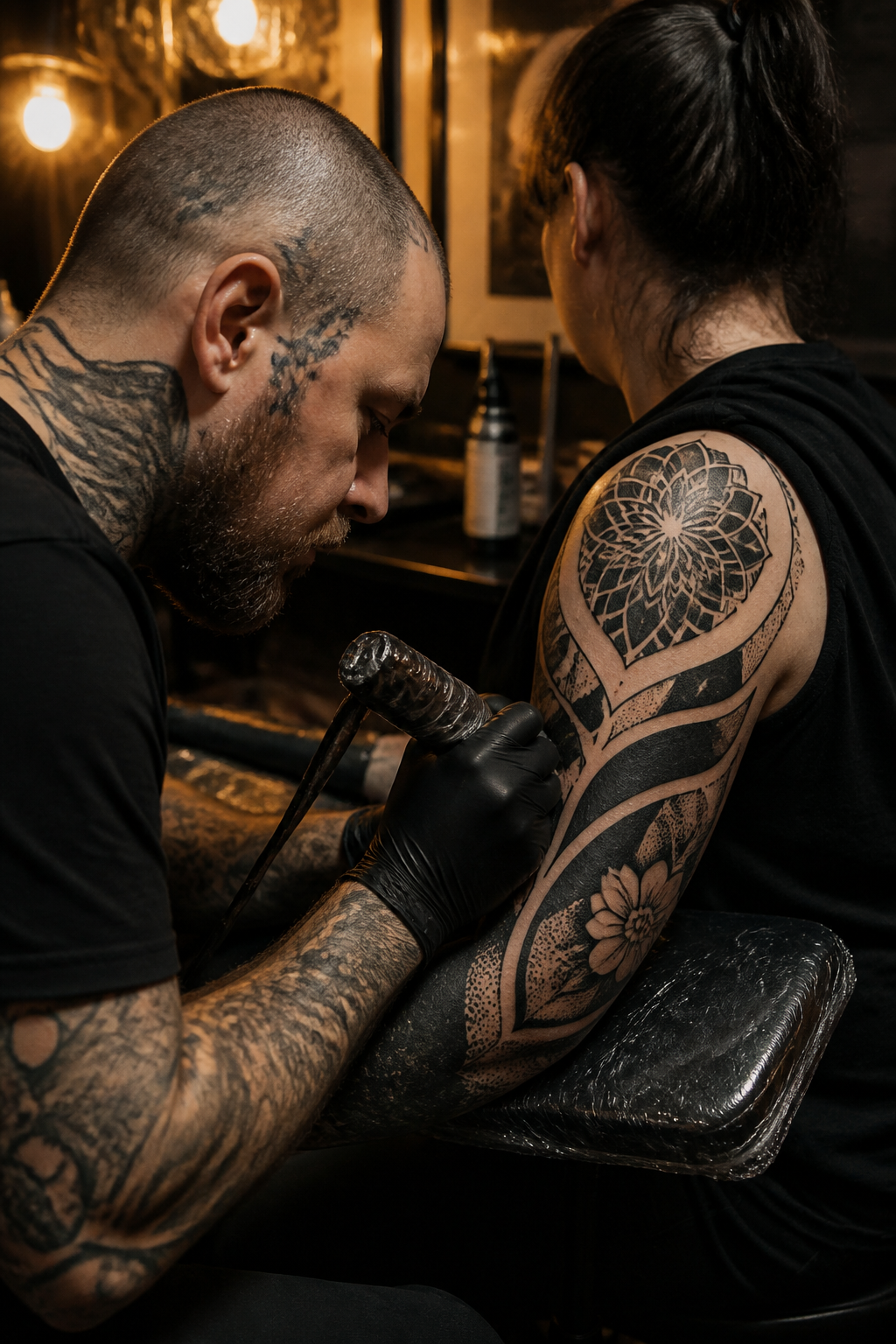
Blackwork is a formidable pillars of modern ink, defined by its exclusive use of solid black pigment. Often traced back to ancient tribal traditions, this movement was revitalized by early pioneers like Leo Zulueta, who brought bold, graphic shapes into the mainstream. Unlike other aesthetics that rely on color theory, blackwork relies on the stark contrast between saturated ink and the natural skin tone of the collector.
What makes this entry in our tattoo styles guide truly recognizable is its sheer intensity. From thick silhouettes to intricate geometric patterns, the focus is always on structural integrity and silhouette. It rejects the nuance of grey shading in favor of high-impact visuals that demand attention from across the room. It is a style that favors the bold, often covering large areas of the body in dense, midnight-dark pigment.
Key sub-genres within blackwork include ornamental, illustrative, and brutalist variations. Some artists focus on heavy blackout panels that utilize negative space to reveal a design, while others use a technique called 'etching' to mimic the look of old woodcut illustrations. This versatility is why blackwork remains a top choice for those looking to make a permanent, powerful statement through their body art.
When choosing a blackwork artist, look for saturation consistency. A master of this style ensures that the black stays deep and velvety over time without patching or fading unevenly. Because these pieces lack color to hide behind, the precision of the linework and the quality of the fill are paramount. It is a timeless choice that bridges the gap between ancient ritual and contemporary graphic design.