Mapping the Calf: Mastering the Perfect Tattoo Placement
2 months ago
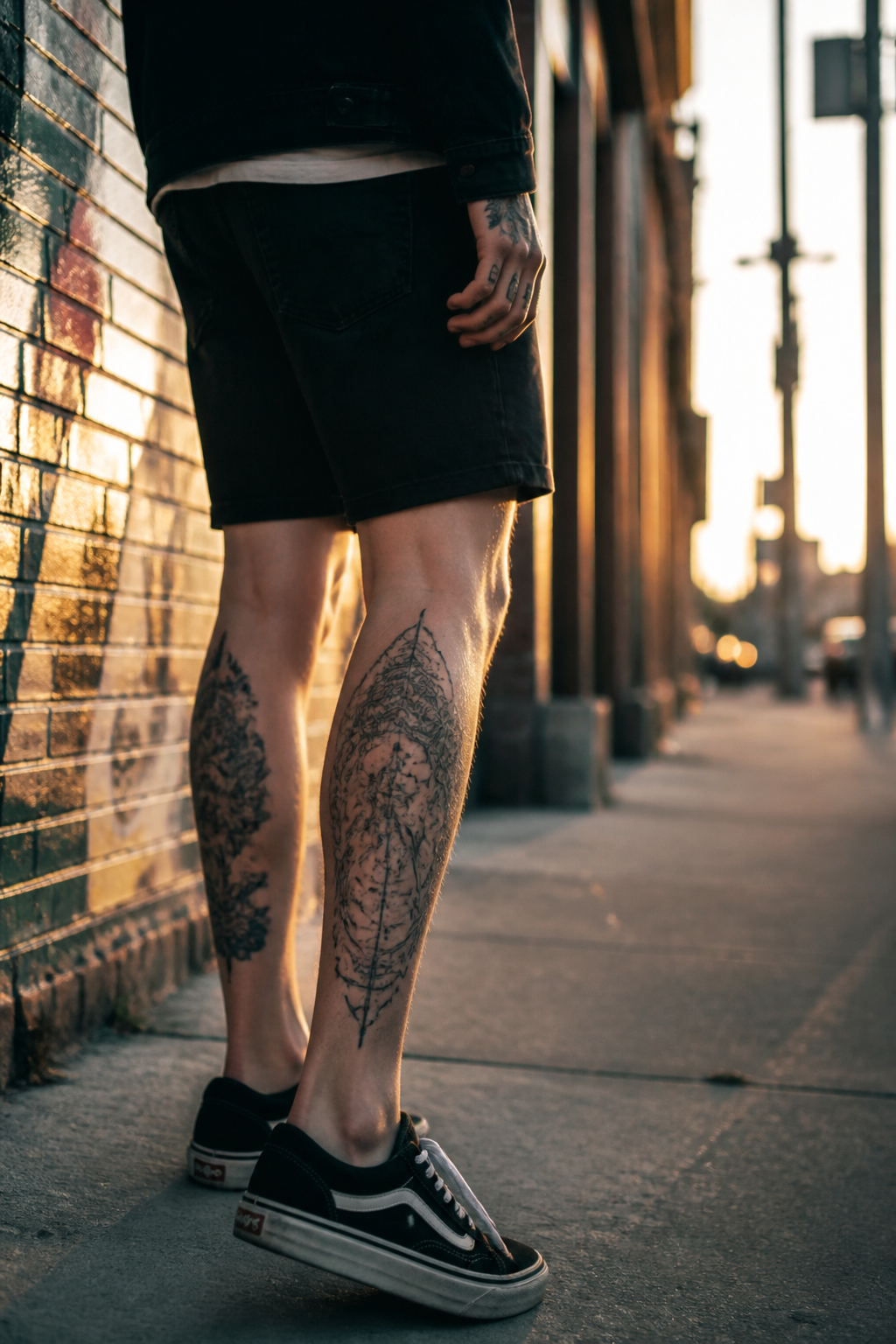
The calf has long been a favorite for collectors who want a significant canvas without the extreme sensitivity of the ribs or spine. Choosing this tattoo placement offers a perfect balance between visibility and discretion; it is easily showcased in shorts but stays hidden under trousers. The musculature of the lower leg provides a sturdy surface, generally resulting in a lower pain threshold compared to the bonier parts of the body.
Designing for the calf requires an understanding of anatomy and movement. Because the muscle tapers toward the ankle and flares at the top, vertical compositions usually work best. Artists often suggest designs that wrap slightly around the side of the leg to utilize the natural curvature, ensuring the image doesn't look flat or distorted when you are walking.
In terms of longevity, the calf is one of the best locations for aging ink. The skin here tends to be thicker and less prone to the rapid stretching or sagging seen on the stomach or inner arms. Additionally, because the lower leg is often protected by clothing, the ink is less exposed to the sun’s UV rays, which is the primary cause of premature fading.
When planning your session, consider how the design will interact with your footwear and socks. A piece that sits too low may be constantly irritated by the friction of a boot, while a piece set too high might disappear behind the knee crease. A skilled artist will place the stencil while you are standing naturally to ensure the symmetry remains perfect once you leave the chair.
Healing a lower-leg piece does come with unique challenges, primarily due to blood flow. Many clients experience a bit more swelling in the first 48 hours compared to an arm tattoo. Keeping the leg elevated during the initial recovery phase helps significantly. Once healed, the result is a bold, resilient piece of art that moves dynamically with every step you take.