
Ink Mechanics: The Technical Reality of a Tattoo cover-up
8 days ago
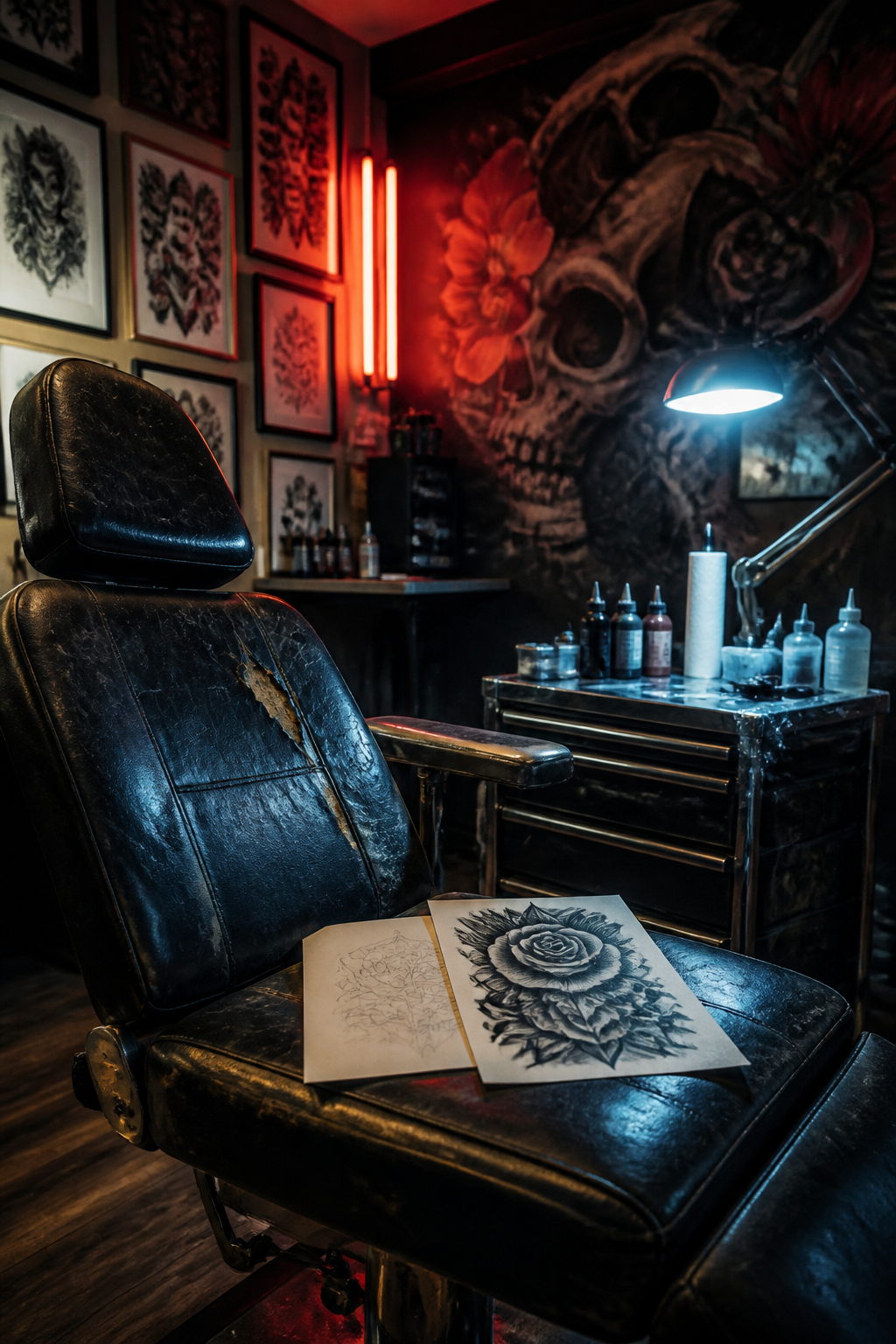
Approaching a tattoo cover-up requires a shift in perspective. Unlike working on clear skin, a cover-up is a strategic battle of light and dark. You cannot simply place a light color over a dark one; ink behaves more like a transparent filter than opaque paint. To successfully hide an old piece, an artist must use darker pigments, dense saturation, and complex textures to distract the eye from the original lines beneath.
Design strategy is the most critical component of a successful project. Large, detailed patterns like heavy floral work, bio-mechanical structures, or high-contrast illustrative styles are ideal. This is because the new design needs a significant amount of 'visual noise' to camouflage the old topography. A minimalist design with plenty of open space will rarely work, as the underlying shadows will peek through the negative areas.
Sometimes, the existing ink is too dark or saturated for an immediate fix. In these cases, many experts recommend a few rounds of laser fade first. Lightening the old piece by just twenty or thirty percent opens up a much wider range of artistic possibilities. Rather than being forced into a solid black block, a lightened base allows your artist to use vibrant colors or more intricate shading without the old tattoo muddying the results.
Choosing the right professional is non-negotiable when dealing with reclaimed skin. Not every great illustrator is a master of the cover-up. You need to find someone with a portfolio specifically showcasing 'before and after' photos of their transformation work. They must understand the science of color theory and skin anatomy to ensure the new pigment heals correctly over the existing internal scar tissue.
Expect the process to be more time-consuming than a standard session. Layers often need to be built up slowly, and a second pass is frequently required once the new ink has fully settled. By understanding these technical limitations, you can work with your artist to turn a source of regret into a high-quality piece of custom art that you are proud to wear.