
Ink Evolution: A Practical Guide to Your Next Tattoo cover-up
8 days ago
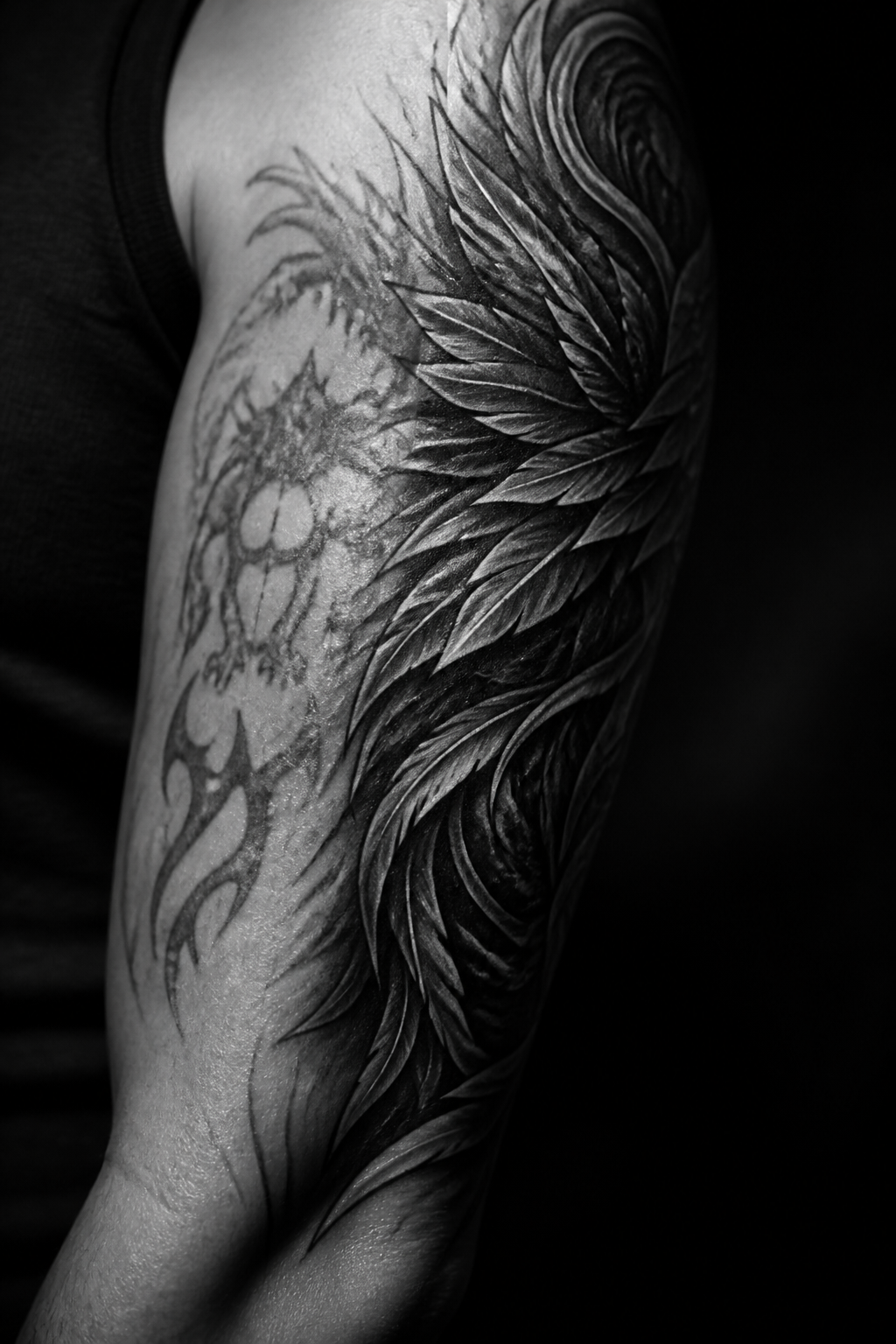
A successful Tattoo cover-up is less about hiding a mistake and more about strategic redirection. Unlike a fresh piece on blank skin, a cover-up must contend with existing pigment already settled in the dermis. This means your artist has to balance saturation, flow, and color theory to ensure the old image doesn't ghost through the new one over time.
Design strategy is the most critical element of the process. You cannot simply place any image over another; the new design typically needs to be larger and more detailed than the original. Darker tones, heavy shading, and complex textures like feathers, scales, or organic floral patterns are often used to camouflage the outlines of the previous work effectively.
Not every old piece is a candidate for an immediate overhaul. If the original ink is too dark or contains heavy scarring, your artist might suggest a few sessions of laser fading first. Lightening the old pigment expands your design options significantly, preventing you from being forced into a very dark or overly dense new piece just to achieve total coverage.
Choosing the right artist for a Tattoo cover-up is a specific skill set that differs from standard tattooing. You need a professional who understands how ink interacts beneath the skin and who has a portfolio dedicated to transformations. They should be able to explain why certain colors work better than others and how the new composition will age.
Communication during the consultation is vital for setting realistic expectations. Be prepared to be flexible with your vision, as the existing ink dictates the boundaries of what is possible. By trusting a specialist and prioritizing the technical needs of the skin, you can turn a source of regret into a bold piece of custom art.