
Ink Alchemy: How a Tattoo Cover-Up Transforms Old Mistakes
18 days ago
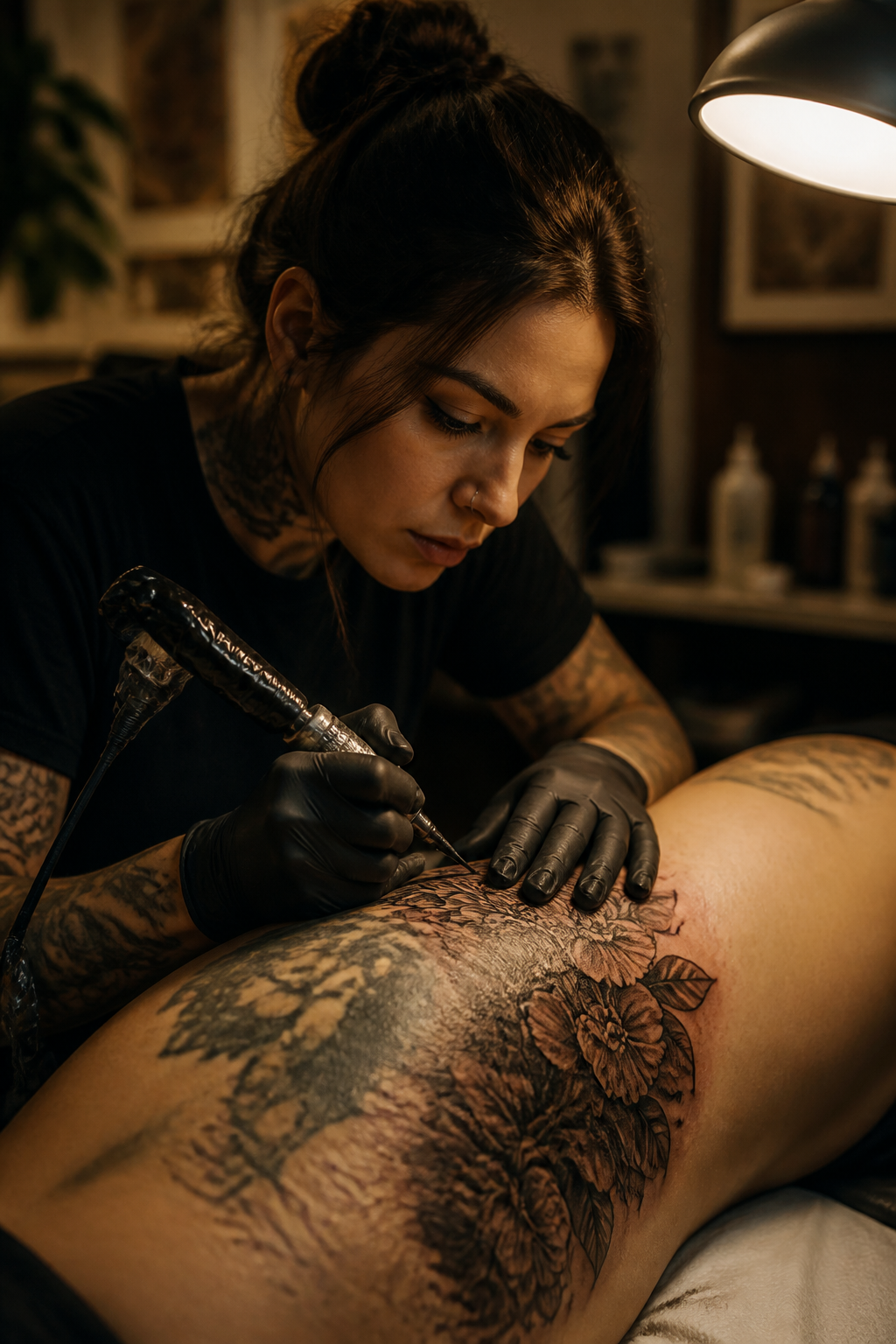
A successful tattoo cover-up is not just about painting over an old image; it is an exercise in color theory and spatial design. Unlike painting on a canvas, tattoo ink is translucent, meaning the old pigment and the new pigment live in the same layer of skin. Darker tones and high-saturation colors are usually required to effectively mask what lies beneath, as light colors will simply allow the old lines to ghost through over time.
Design strategy is the most critical element of the process. A skilled artist will use the existing shapes and flow of the old piece to hide it within new, complex textures. High-contrast patterns, deep shading, and organic shapes like dense florals or bio-mechanical details are often favored because they break up the visual recognition of the underlying ink, tricking the eye into seeing only the new composition.
There are physical limitations to what the skin can handle. If the original piece is heavily scarred or contains thick, black tribal lines, a direct cover-up might result in a muddy, illegible mess. In these cases, artists often recommend a few sessions of laser removal to fade the old ink. Lightening the pigment by even thirty percent opens up a much wider range of color palettes and stylistic choices for the final design.
Choosing the right artist is the final piece of the puzzle. Not every world-class illustrator is a master of the cover-up; it requires a specific understanding of how pigments interact and how to camouflage heavy outlines. Look for a portfolio that explicitly shows 'before and after' photos to ensure the artist knows how to manage the unique challenges of corrective work.
Ultimately, a tattoo cover-up is about reclaiming your skin and moving forward with art you are proud to wear. By respecting the technical limits of the medium and collaborating with a specialist, you can turn a regrettable decision into a masterpiece that looks intentional rather than accidental. Patience and proper planning are your best tools for a seamless transition.