Hyper-Saturation: Why Color Blast is Leading 2026 Tattoo trends
2 months ago
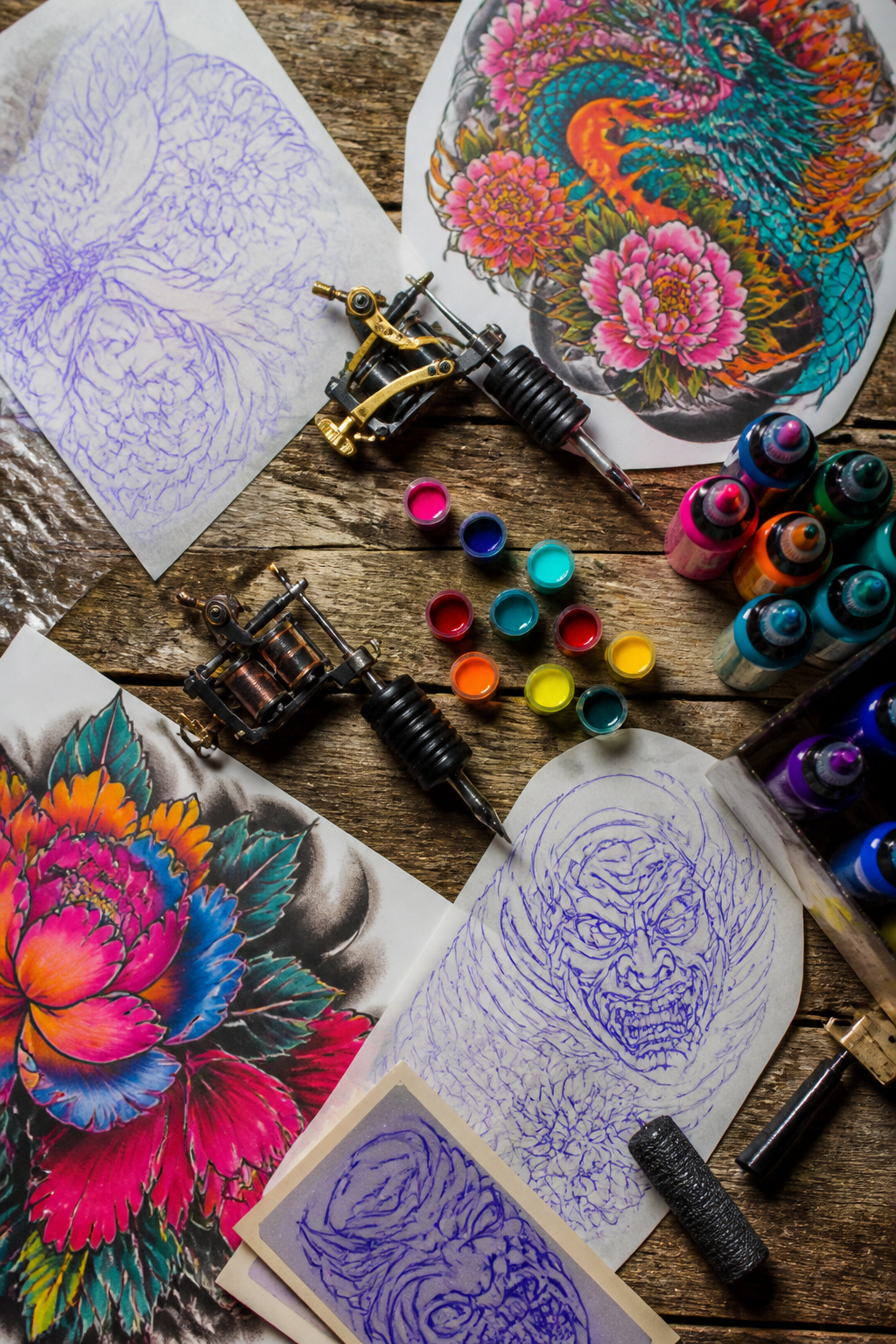
The landscape of body art is shifting away from the muted tones of previous years toward a high-octane palette. The 'Color Blast' movement is currently one of the most visible tattoo trends, defined by neon pigments and a total absence of black outlines. This style relies on the juxtaposition of contrasting hues to create depth and dimension, resulting in pieces that look like digital art applied directly to the skin.
This movement gained momentum in the underground art scenes of Berlin and Seoul, where artists began experimenting with ink formulas that maintain long-term vibrancy. Unlike traditional neo-traditional work that utilizes heavy linework, Color Blast artists use soft transitions and sharp light-source highlights to make the subject matter pop. It is a rebellion against the 'fine-line fatigue' that dominated the early 2020s.
Artists like Duda Lozano and Vancity Inker have been instrumental in driving this shift, blending elements of patch-work aesthetics with comic-book vibrancy. By focusing on how different pigments interact with various skin tones, these pioneers have proven that color-only tattoos can be both durable and visually stunning. The goal is to achieve a sticker-like quality that appears to sit on top of the dermis.
Technical precision is at the heart of this revival. Collectors are increasingly seeking out artists who specialize in light theory and color saturation rather than simple sketching. Because there is no black ink to hide behind, every saturated stroke must be perfectly placed to ensure the design doesn't wash out over time. It is a high-stakes approach to tattooing that requires an expert understanding of saturation.
As we look further into 2026, the trend is expanding to include iridescent and holographic effects. By layering specific shades of cyan, magenta, and yellow, artists are simulating the look of oil slicks and prismatic light. This evolution shows that the community is no longer afraid of bold, bright pigments, embracing a future where skin is a canvas for pure, unfiltered color.