Healing the Masterpiece: Your Essential Tattoo Aftercare Roadmap
22 days ago
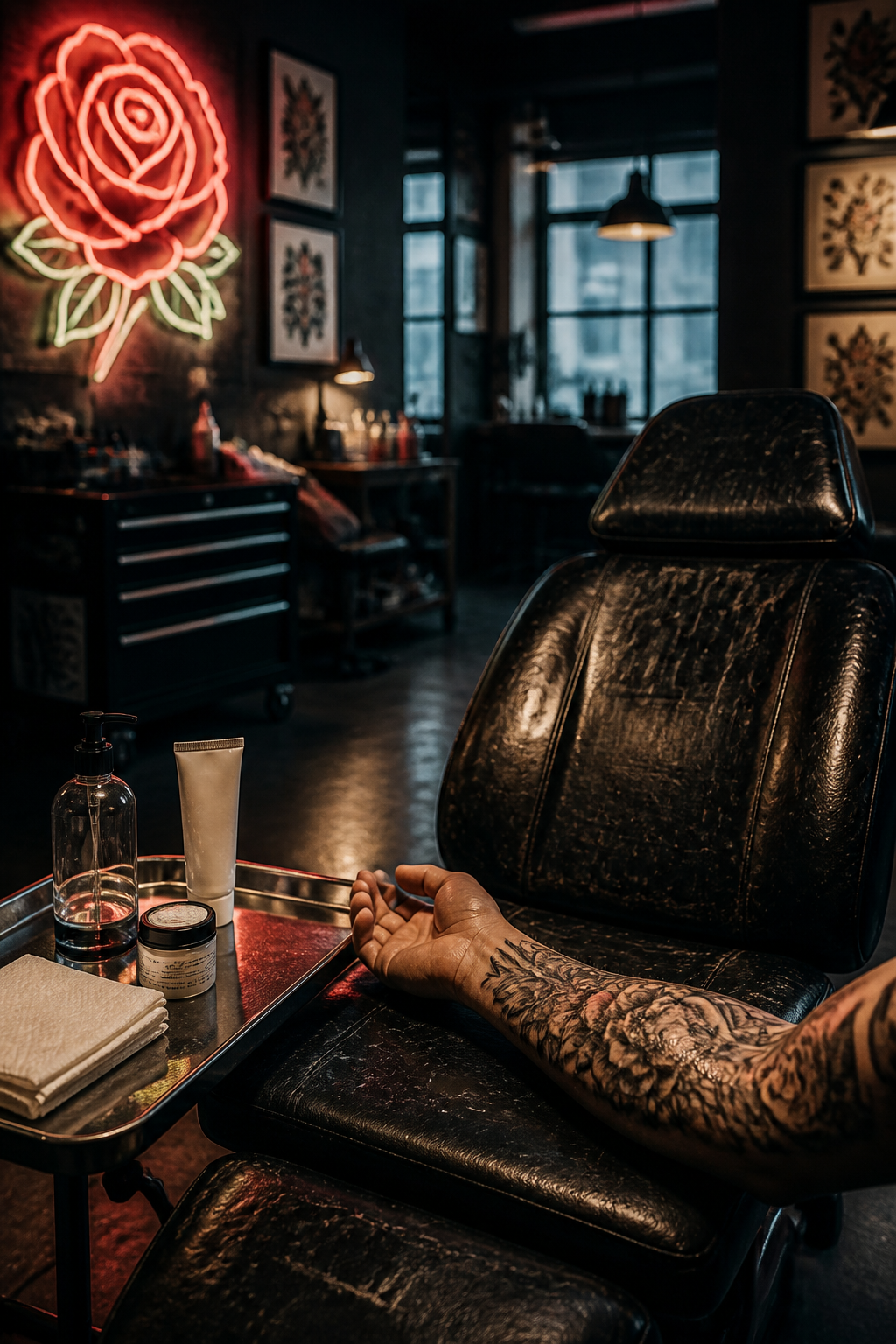
The first 48 hours are the most critical phase for your new ink. Once you leave the studio, your body begins the natural inflammatory response to the needlework. Keep your artist's initial bandage on for the recommended time—usually a few hours for standard wrap or up to several days for medical-grade adhesive films. This initial barrier protects the open wound from bacteria while it begins to seal.
When it is time for the first wash, use only lukewarm water and a fragrance-free, antimicrobial liquid soap. Gently use your clean fingertips to remove any excess ink, plasma, or dried blood. Avoid using washcloths or loofahs, as these are too abrasive and can harbor bacteria. Once clean, pat the area dry with a fresh paper towel rather than a bathroom towel that might shed lint.
Moisturizing is the next pillar of successful tattoo aftercare. During the first few days, apply a very thin layer of specialized tattoo ointment or a plain, unscented lotion. The goal is to keep the skin hydrated without suffocating it. Over-applying product can clog pores and lead to breakouts or even pull ink out of the skin, so remember that less is always more.
As your tattoo enters the peeling stage, it is vital to avoid picking or scratching. Think of the peeling skin like a scab; if you pull it off prematurely, you risk losing pigment and creating patchy spots. During this window, you must strictly avoid swimming in pools, lakes, or oceans, as prolonged soaking can soften the skin and lead to infection or fading.
Sun exposure is the silent enemy of fresh pigments. UV rays break down ink particles, leading to premature blurring and fading. Keep your new piece covered with loose, breathable clothing while it heals. Once the skin is fully regenerated—usually after three to four weeks—make high-SPF sunscreen a permanent part of your daily routine whenever the tattoo is exposed to the elements.
Most tattoos heal without issue if you follow these steps, but you should always stay vigilant. If you notice extreme swelling, spreading redness, or foul odors, contact your artist immediately or consult a healthcare professional. A well-healed tattoo is a collaboration between the artist’s skill and your dedication to the recovery process.