Healing Right: The Ultimate Tattoo aftercare Protocol
2 months ago
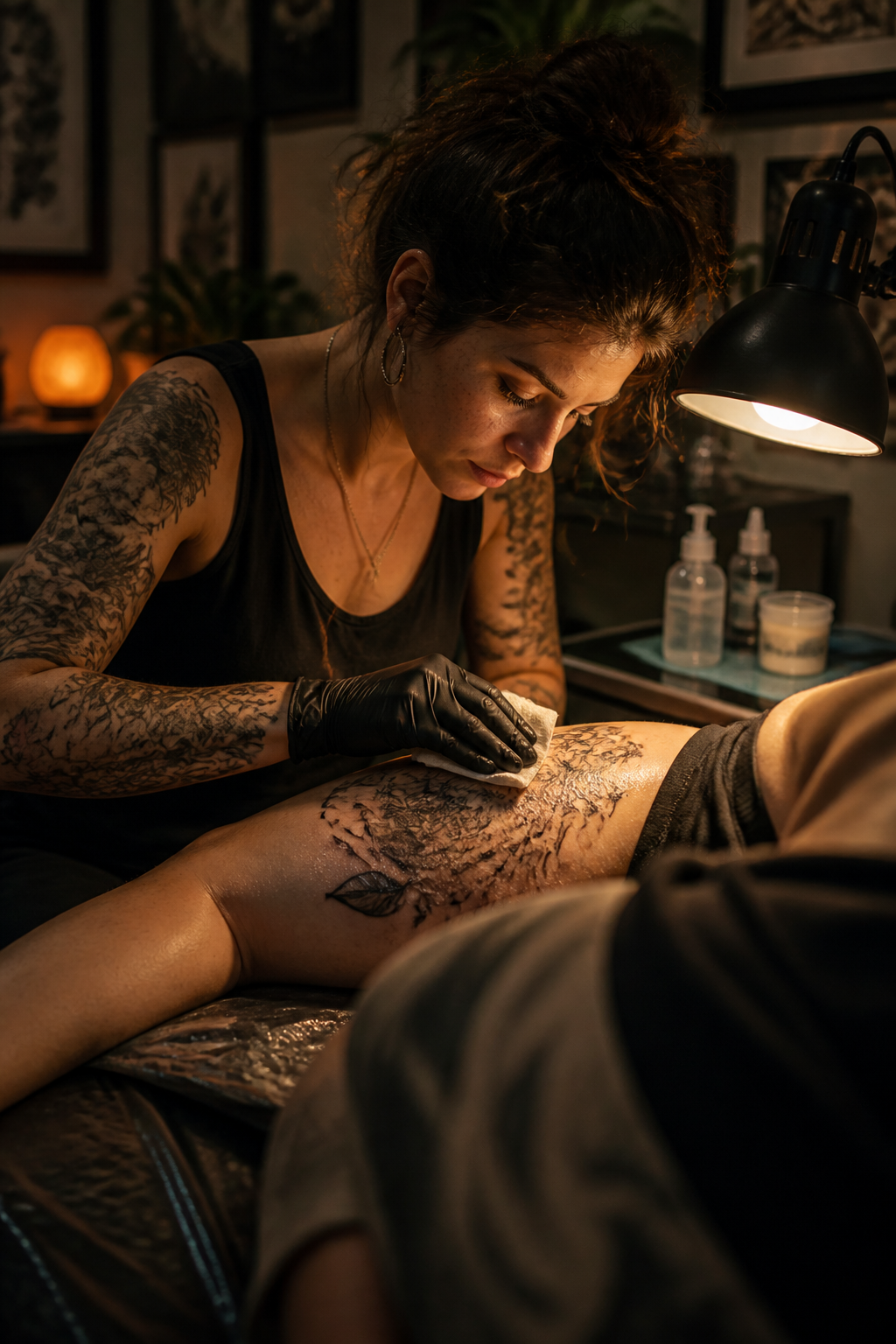
The first 48 hours are critical for the longevity of your new piece. Once you leave the studio, keep the bandage on for the time your artist recommended—usually two to four hours. When you remove it, you'll notice a fluid buildup of ink, plasma, and blood; this is completely normal. Gently wash the area with lukewarm water and a fragrance-free, antibacterial soap using only your clean fingertips to remove the surface fluids.
After washing, pat the area dry with a clean paper towel rather than a cloth towel to avoid lint and bacteria. During the first two days, your primary goal is to keep the area clean and slightly dry to allow the skin to begin closing. Avoid applying a thick layer of ointment, as the skin needs to breathe. A very thin layer of artist-recommended balm is all you need to prevent the skin from feeling overly tight.
Moisturizing becomes more important as the tattoo enters the peeling stage, typically after the third day. Switch to a fragrance-free lotion and apply it two to three times daily. It is vital to never pick, scratch, or peel the scabs that form. Forcing a scab off prematurely can pull the pigment out of the dermis, leaving patchy spots in your artwork that will require an expensive touch-up later.
Environmental factors are the biggest enemies of new ink. You must strictly avoid swimming in pools, hot tubs, or natural bodies of water for at least two to three weeks, as bacteria can easily enter the open wound. Furthermore, direct sun exposure during the healing phase can cause the ink to fade rapidly or even trigger a painful skin reaction. Keep the tattoo covered with loose-fitting, breathable clothing until it is fully healed.
The typical healing timeline lasts about four to six weeks, though the surface level usually looks 'done' within fourteen days. Even after the peeling stops, wait a full month before applying high-SPF sunscreen to the area. Consistent protection from UV rays is the only way to maintain the sharp contrast and saturation of your tattoo over the coming years.
While most healing processes are straightforward, you should stay vigilant for signs of trouble. If you notice extreme swelling, spreading redness, or yellow discharge that persists beyond the first few days, contact your artist immediately. They can help you determine if the reaction is normal or if you need to consult a medical professional. Proper communication ensures your art stays as beautiful as the day it was finished.