
Guided by Grit: The Classic Compass Tattoo Meaning
2 months ago
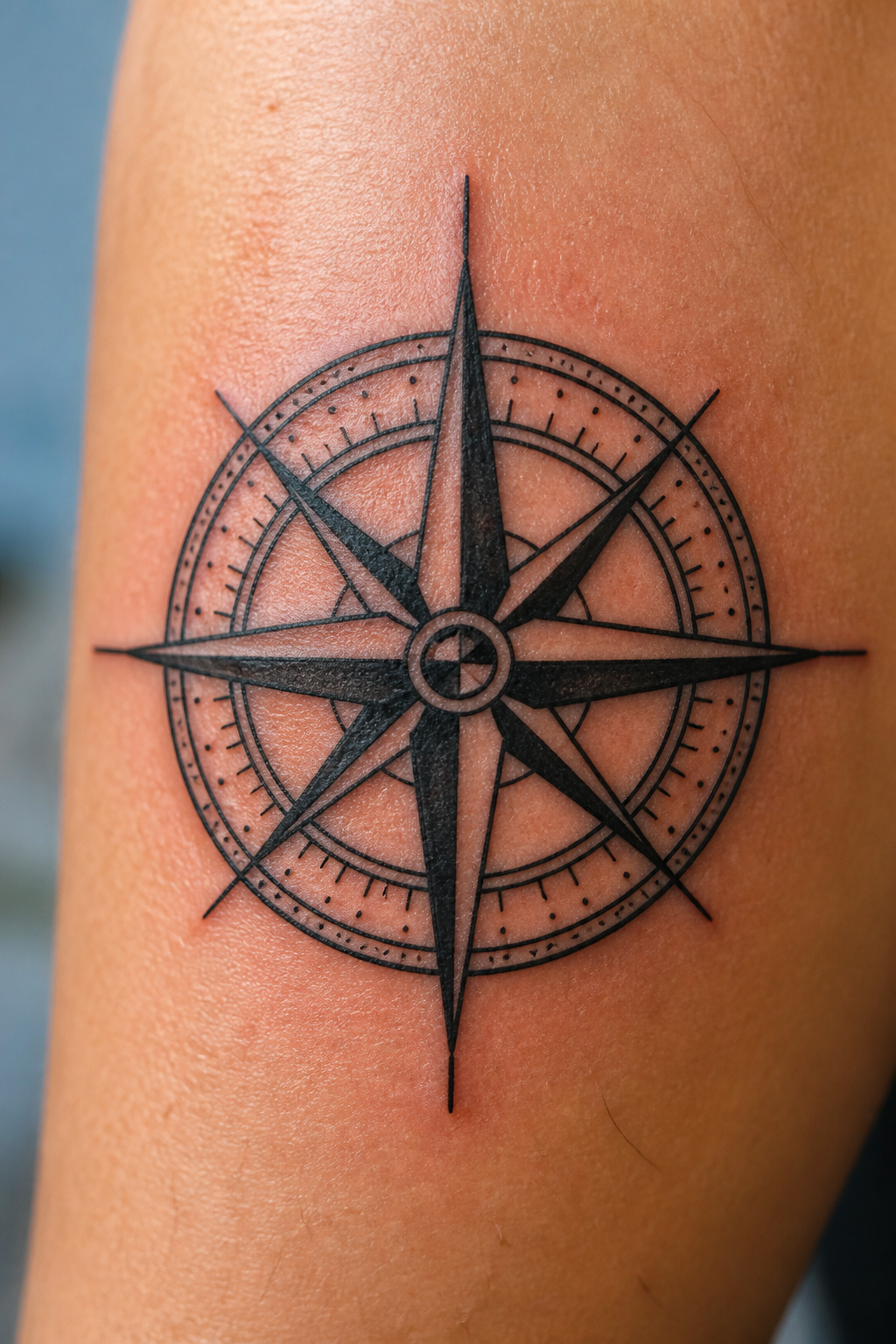
Long before it became a staple in modern parlance, the compass was a literal lifeline for sailors traversing the unpredictable open seas. Originally associated with the mariner’s ‘nautical star,’ the compass tattoo meaning was rooted in the desperate hope for a safe return home. In an era where navigation was as much luck as it was science, having this symbol etched into the skin was considered a protective charm against the chaotic elements of the ocean.
As the seafaring tradition evolved into the American Traditional style of the early 20th century, the imagery became more refined. The eight-pointed rose of the winds became the standard, often paired with ropes, anchors, or swallows. During this time, the motif represented loyalty to one's crew and the unwavering desire to find a harbor in a storm. It was a badge of the traveler, marking those who had crossed the equator or survived long voyages.
In the contemporary tattoo scene, the compass tattoo meaning has shifted from a literal maritime tool to a metaphorical guide for life's journey. Modern wearers often use the symbol to represent a significant life change, such as sobriety, a career shift, or the recovery of one's personal identity. It serves as a visual reminder to stay true to one’s internal ‘True North’ when external pressures threaten to pull them off course.
Today’s artists have moved far beyond the bold lines of the sailor era. You will find compasses rendered in delicate fine-line work, complex geometric patterns, or hyper-realistic designs featuring cracked glass and weathered brass. Some collectors choose to leave the needle off the ‘N’ to symbolize that their path is still being written, while others add specific coordinates to ground the piece in a physical location that changed their life.
Ultimately, the enduring popularity of this motif lies in its versatility. Whether it is a small, minimalist piece on the wrist or an intricate backpiece, the core sentiment remains universal. It is a symbol of autonomy and the courage to navigate the unknown without losing sight of where you came from.