
Edge and Elegance: The Technical Mastery of Hand Tattoo Placement
11 days ago
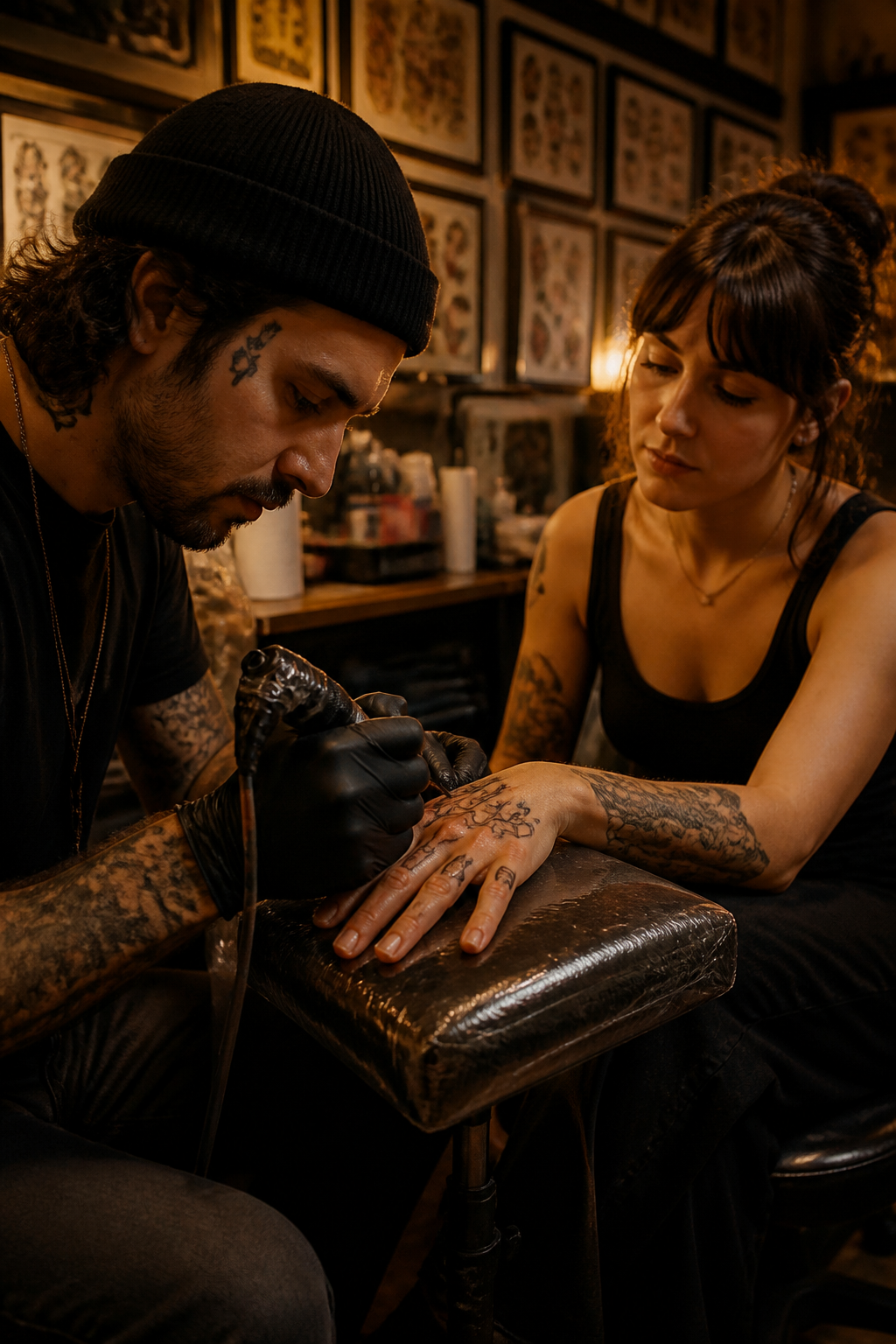
Choosing the hand as your canvas is a bold move that demands careful planning. Hand tattoo placement is unique because the skin here is exceptionally thin, sitting directly over a complex network of bones and tendons. This makes the session feel more intense than a forearm piece, as the vibration of the machine resonates through the entire limb. Understanding this physical reality is the first step for any collector ready to commit to this highly visible area.
Designing for the hand requires a deep understanding of human anatomy. Unlike flat surfaces, the hand is a series of curves, joints, and shifting planes. A successful design must account for how the image distorts when you make a fist or extend your fingers. Professional artists often use the natural flow of the metacarpal bones to anchor the composition, ensuring the art looks intentional whether the hand is at rest or in motion.
Longevity is the biggest challenge when it comes to this specific location. The skin on our hands undergoes constant friction, frequent washing, and high sun exposure, all of which contribute to faster fading. To combat this, experienced artists recommend bold lines and high-contrast shading. Fine-line work can easily blur over time in this high-mobility zone, so prioritizing structural integrity in the design is vital for a piece that stands the test of time.
Healing a hand piece requires more diligence than almost any other spot. Because we use our hands for everything, the risk of irritation or accidental scabbing is significantly higher. You must be prepared to limit manual labor and keep the area meticulously clean during the first two weeks. Despite these challenges, the visual impact of a well-executed hand piece remains unmatched in modern tattoo culture.