
Chrome Hearts and Steel Parts: The Rise of Bio-Mechanical Tattoos
3 months ago
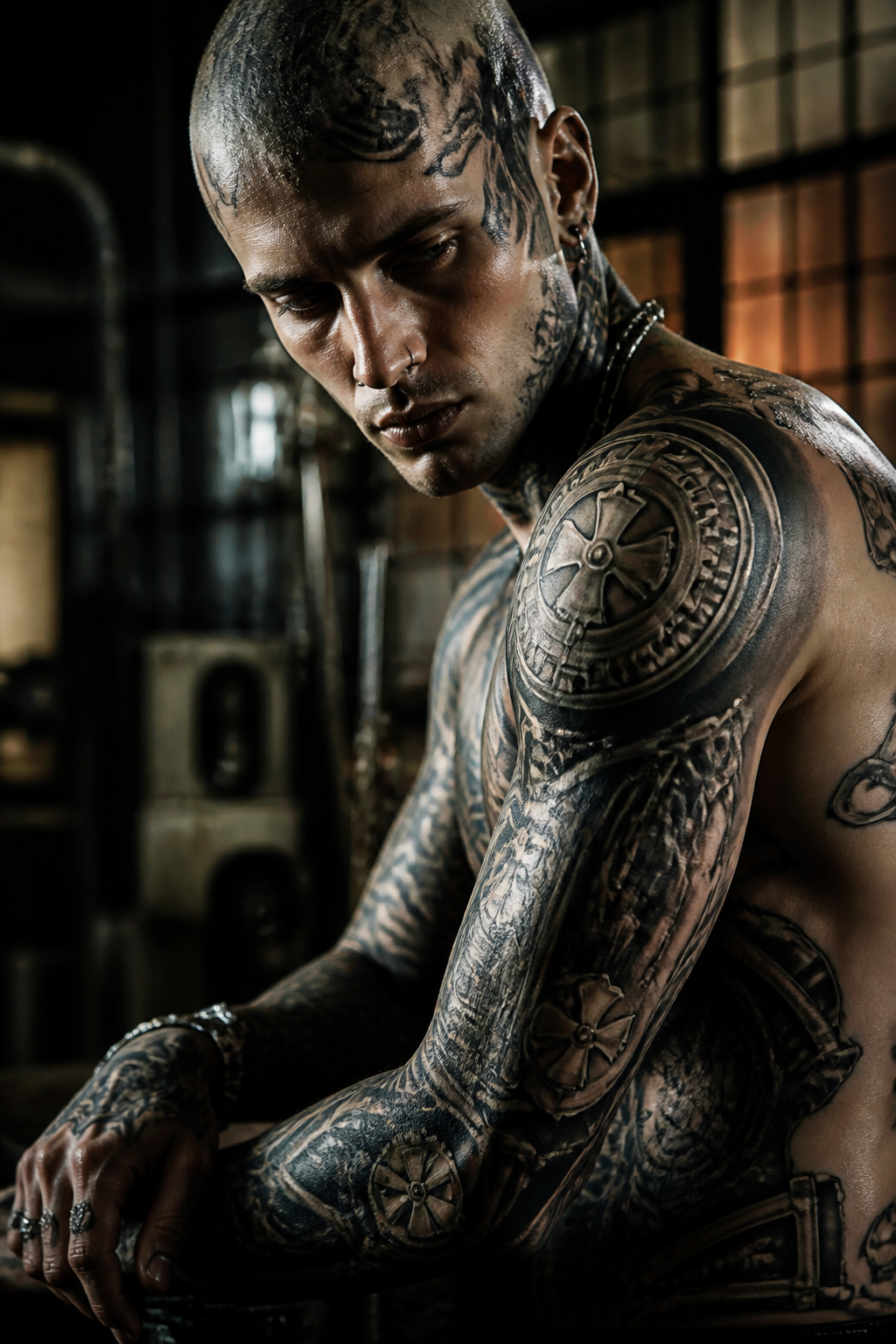
The tattoo world is currently obsessed with a return to the industrial. While fine-line florals and micro-realism have dominated social media feeds for years, a gritty new movement is clawing its way back to the surface. Bio-mechanical art, a staple of the 90s made famous by masters like H.R. Giger, is being reimagined for a new generation of collectors who want their skin to look like a window into a high-tech engine.
Today’s iteration of the style moves away from the muddy purples and greens of the past. Modern artists are utilizing ultra-saturated blacks and negative space to create high-contrast 'cyber-organic' textures. These designs wrap around limbs and joints, creating the illusion of pistons, wires, and carbon fiber plating integrated directly into the wearer’s connective tissue.
Technique is the driving force behind this revival. Artists are pushing the boundaries of depth, using layered shading to make mechanical components appear three-dimensional. When done correctly, a bio-mechanical piece moves with the body, making the elbow look like a hydraulic hinge or the calf look like a reinforced steel strut. It is as much an exercise in anatomy as it is in engineering.
Collectors are increasingly drawn to this aesthetic as a form of rebellion against the 'clean girl' minimalism that has saturated the market. Bio-mechanics offer a sense of permanence and weight that delicate linework often lacks. It is a commitment to a vision of the future that is raw, powerful, and undeniably heavy.
As we see more artists specializing in these complex, full-coverage projects, the barrier for entry is rising. This isn't a style for the faint of heart or those seeking a quick walk-in. These are massive, multi-session undertakings that require a deep understanding of how light interacts with textured surfaces like chrome and matte-finish steel.
Whether you are looking for a small integrated piece or a full-body suit, the bio-mechanical trend shows no signs of slowing down. It captures a specific cultural moment where our relationship with technology is becoming more intimate than ever, literally etching the machine into the soul.