
Chrome and Cyber: The High-Tech Tattoo Trends Reshaping 2026
2 hours ago
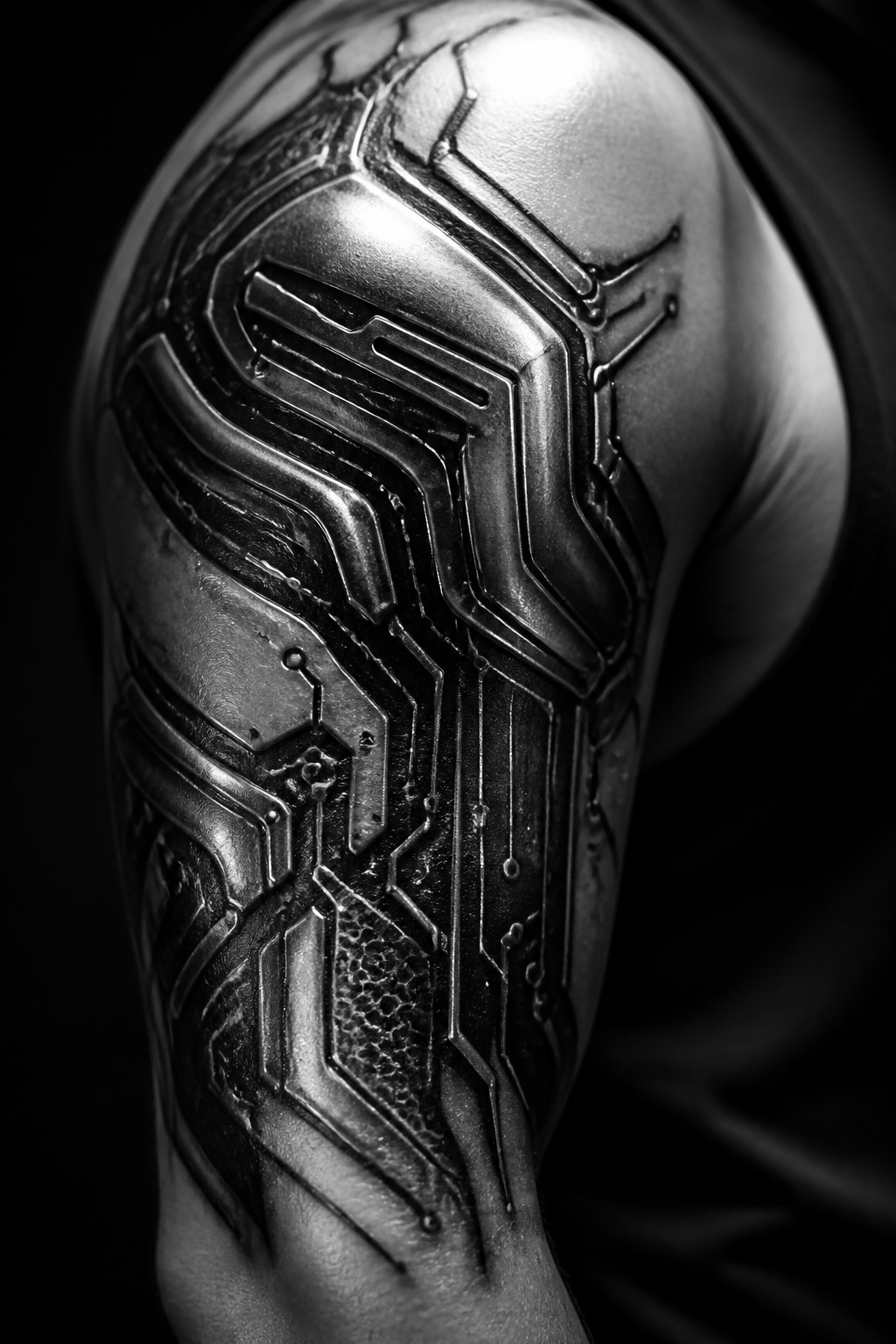
The landscape of body art is shifting toward a liquid-metal aesthetic as we move deeper into the decade. Chrome realism and hyper-reflective textures have emerged as the dominant tattoo trends for 2026, moving away from flat blackwork and toward high-contrast, three-dimensional illusions. This style relies on advanced shading techniques to mimic the way light bounces off polished steel and mercury, creating a futuristic look that feels like an organic extension of the skin.
This movement traces its origins back to the experimental underground scenes of Berlin and Tokyo, where artists began blending brutalist architecture with fluid motion. By pushing the boundaries of white ink and negative space, these creators developed a method that makes static images appear as though they are melting or vibrating. It is a stark departure from traditional outlining, favoring depth and texture over bold, black borders.
Leading the charge are visionary artists like Inal Bersekov and the collective at South Korea’s Studio By Sol, who have mastered the art of micro-metallic detail. Their work often features liquid droplets, chrome chains, and metallic hardware that look so realistic they seem to sit on top of the dermis. This technical precision requires a deep understanding of light theory, making these pieces highly sought after by collectors seeking avant-garde designs.
Social media has further fueled this fire, particularly through the 'cybergoth' and 'techno-wear' subcultures. Collectors are increasingly opting for large-scale chrome wraps that follow the musculature of the arms and legs, creating a sleek, robotic silhouette. As equipment becomes more precise, artists are able to pack more detail into these metallic reflections than ever before.
For those looking to stay ahead of the curve, the shift toward hyper-realistic textures is the ultimate way to modernize a collection. Whether it is a single liquid drop or a full chrome sleeve, this trend represents the perfect intersection of fine art and technical execution. It proves that the future of ink isn't just about the image itself, but the way that image interacts with the environment around it.