
Chicano Roots: A Bold Heritage Tattoo Styles Guide
8 days ago
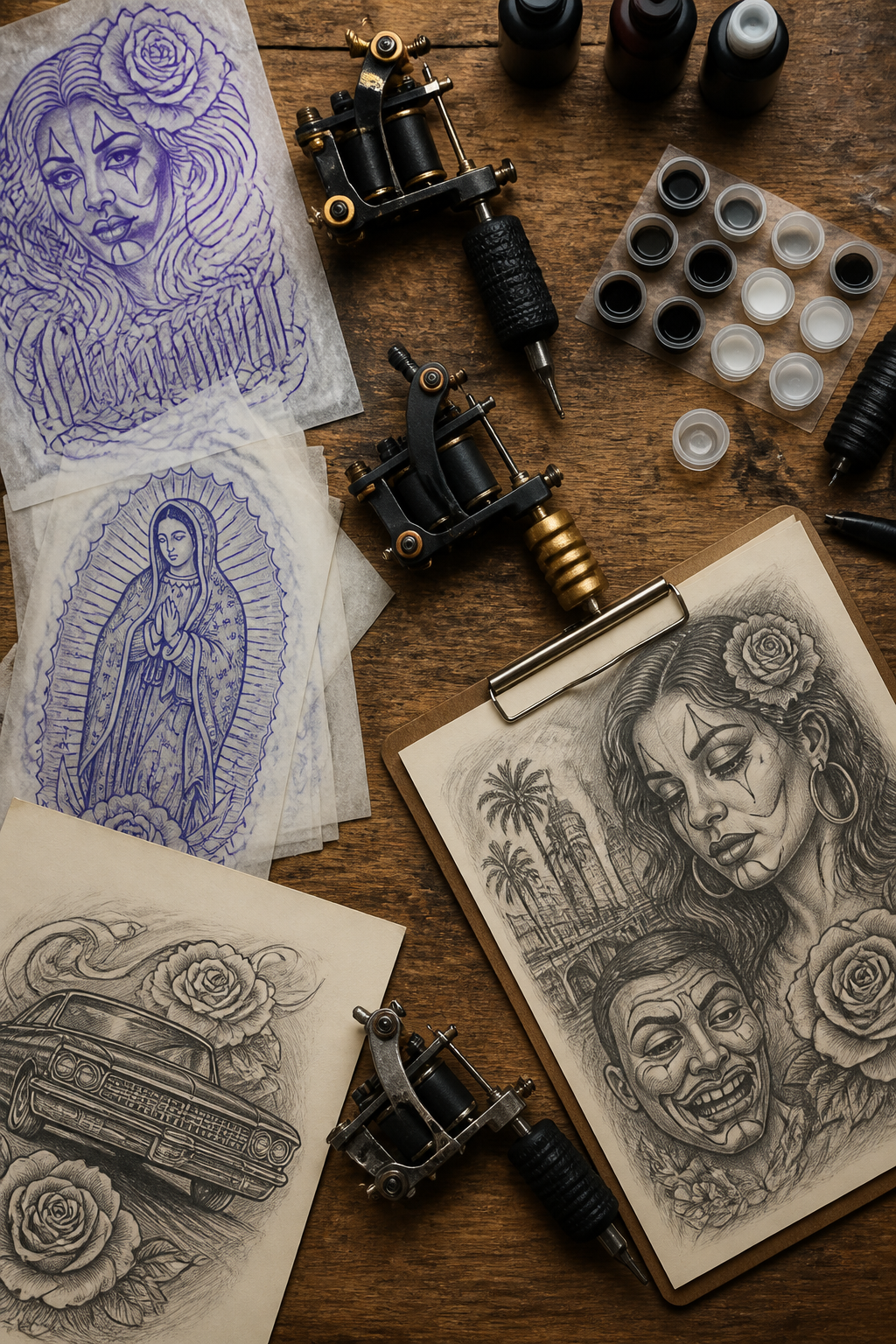
Chicano tattooing is a powerful testament to heritage, identity, and the streets of East Los Angeles. Originating within the Pachuco culture of the 1940s and further refined within the California penal system, this style is defined by its use of black and grey ink. What began as a necessity—using limited resources like guitar strings and soot—has evolved into one of the most respected and technically demanding aesthetics in the modern industry.
At the heart of any Chicano tattoo styles guide is the emphasis on smooth, fine-line work and soft shading. Unlike the bold, saturated blocks of color found in American Traditional, Chicano art relies on atmospheric gradients to create depth. It focuses heavily on realism, often depicting portraits, classic lowriders, and elaborate script that pays homage to family and neighborhood roots.
Key figures such as Jack Rudy and Freddy Negrete are credited with transitioning these techniques from the streets to high-end studios. By utilizing a single-needle approach, these artists were able to achieve a level of detail previously unseen in Western tattooing. This technique allows for hyper-realistic textures in cloth, metal, and skin, making the imagery pop against the wearer's natural tone.
Recognizing this style is easy once you look for its signature motifs. You will frequently see 'Smile Now, Cry Later' masks, stylized roses, and intricate lettering that looks like high-end calligraphy. The composition is often dense and narrative, telling a personal story of struggle, loyalty, and triumph through a monochromatic lens.
Today, the style has transcended its regional origins to become a global phenomenon. Collectors worldwide seek out the smooth grey-wash transitions and crisp linework that define the genre. It remains a top choice for those wanting large-scale pieces, such as full back panels or chest pieces, that maintain a sense of elegance despite their gritty, street-inspired foundations.
When choosing this aesthetic, it is essential to find an artist who masters the nuances of needle depth. Because the style relies so heavily on light shading, the longevity of the piece depends on the artist's ability to layer grey tones without causing trauma to the skin. It is a style that honors the past while pushing the boundaries of what fine-line realism can achieve.