
Chicano Heritage: A Deep Dive Into the Black-and-Grey Tattoo Styles Guide
14 days ago
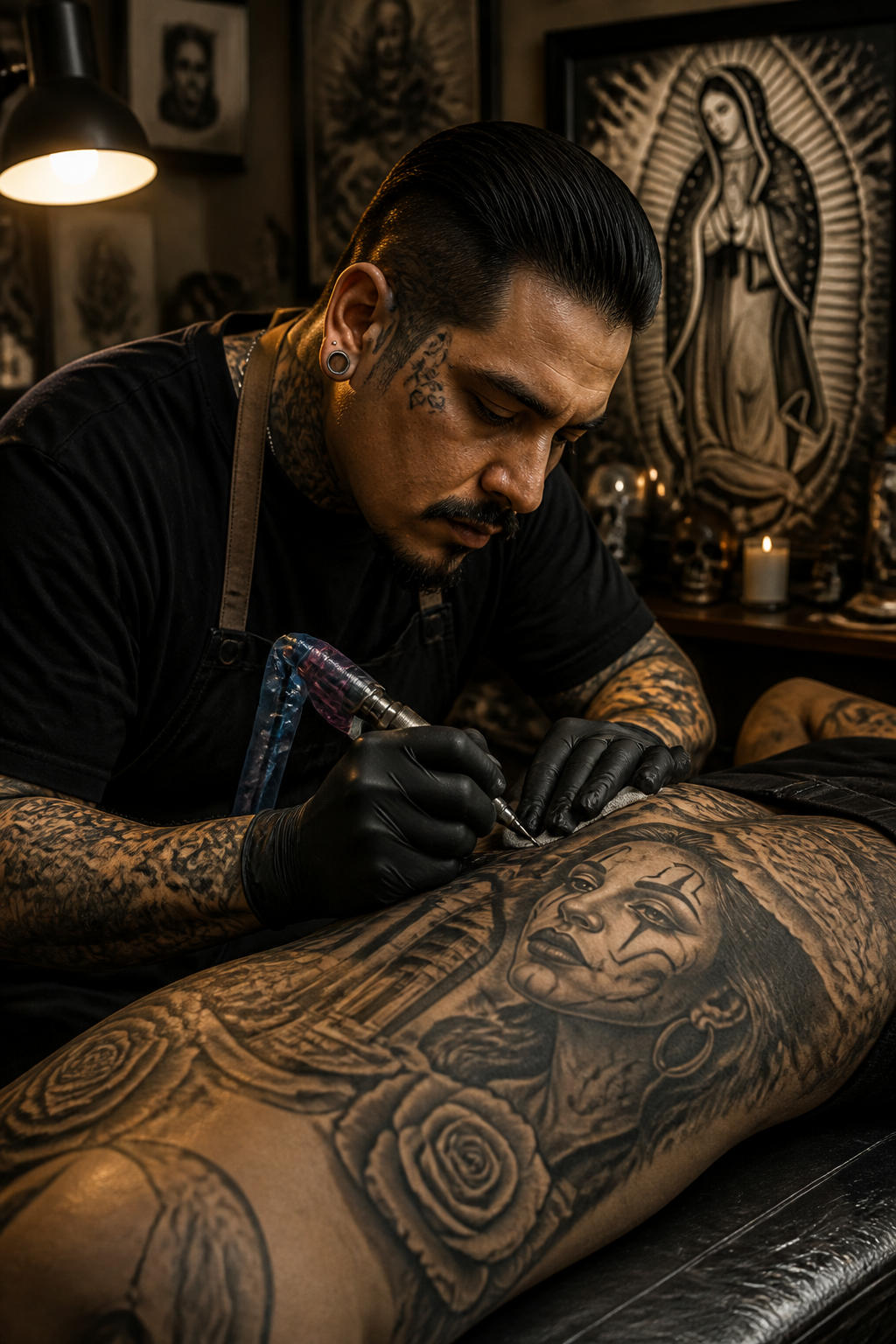
Born from the Pachuco culture and refined within the walls of California prisons, the Chicano style is one of the most recognizable genres in modern tattooing. Originally executed with single needles and makeshift ink, this aesthetic has evolved into a high-art form defined by smooth black-and-grey gradients. It is a style that prioritizes storytelling, often weaving together themes of family, street life, and cultural pride into seamless, large-scale compositions.
What makes this entry in our tattoo styles guide truly stand out is the 'fineline' technique. Unlike the bold, heavy outlines of American Traditional, Chicano work relies on delicate linework and soft, smoky shading. Artists achieve a photorealistic depth using only varying dilutions of black ink, a method known as 'grey wash.' This allows for intricate details in portraits and complex lettering that looks as though it were drawn directly onto the skin with a graphite pencil.
Key imagery in this style often includes iconic motifs such as classic lowriders, stylized portraits, and the famous 'Payasa' or clown girl figures. These elements are not just decorative; they represent a specific history of resilience and identity within the Mexican-American community. The mastery required to execute these pieces involves a deep understanding of light and shadow, ensuring that the ink ages gracefully without losing its sharp definition over time.
Legendary artists like Freddy Negrete and Jack Rudy are credited with bringing this underground movement into the mainstream spotlight during the late 20th century. By transitioning the style from a single-needle 'jailhouse' method to professional studios, they revolutionized the industry. Today, Chicano tattooing is a global phenomenon, influencing everything from high-fashion imagery to contemporary micro-realism, yet it remains firmly rooted in its gritty, authentic origins.