
Artist spotlight: Julian Vane and the Fluid Architecture Movement
16 days ago
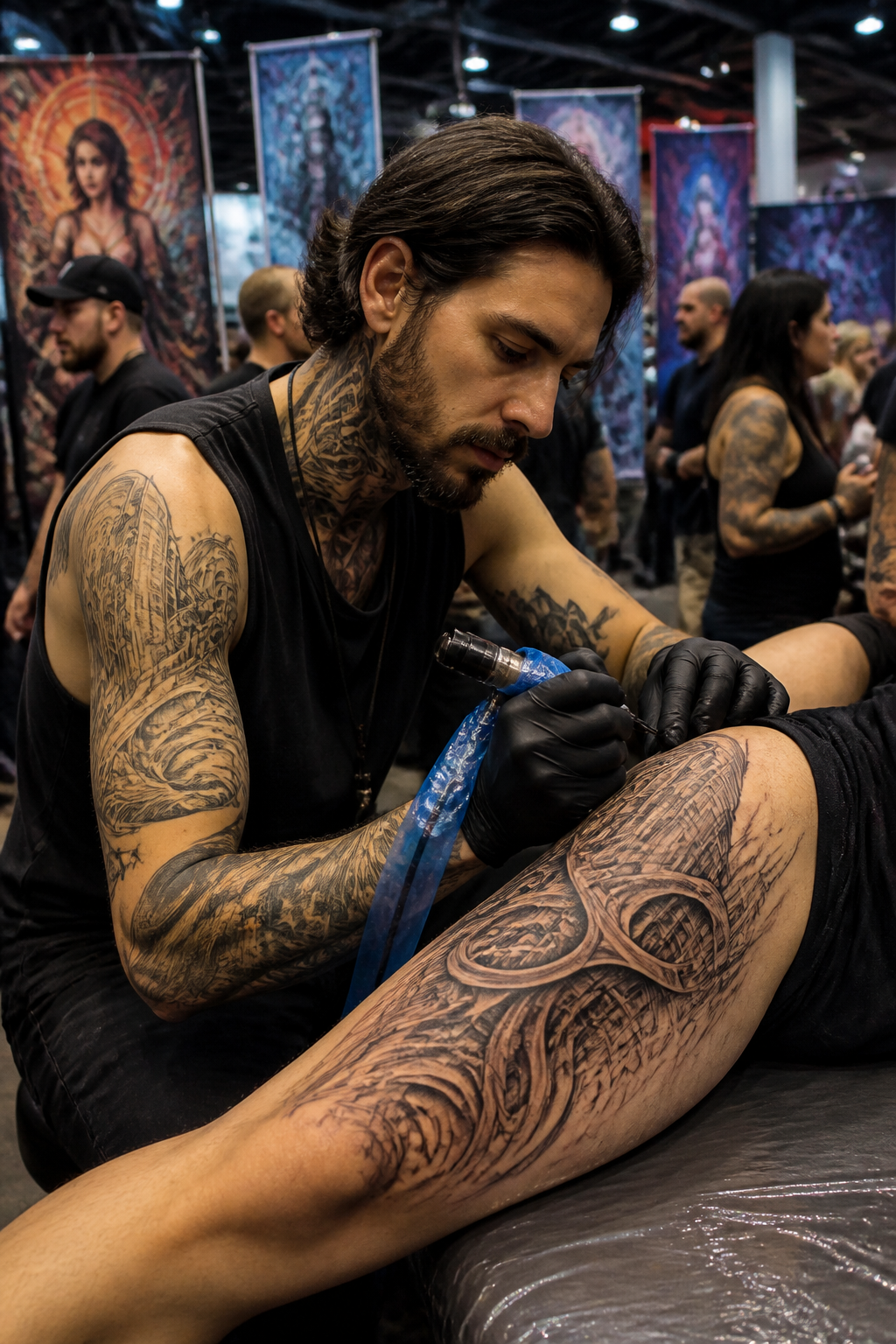
Based out of a sun-drenched studio in Chicago’s West Loop, Julian Vane is quickly becoming the name on every collector's lips. His signature style, which he calls 'Fluid Architecture,' merges the rigid lines of urban drafting with soft, charcoal-like shading. It is a striking juxtaposition that mimics the way a city feels against a changing sky, making his work instantly recognizable in a crowded industry.
Recently, Vane completed a massive back piece titled 'The Grid,' which integrated the layout of the Chicago river with abstract geometric shards. Unlike traditional technical work, Vane’s lines aren't perfectly straight; they pulse and break, suggesting movement and life within the concrete. This project solidified his reputation for creating large-scale compositions that feel like they are part of the wearer's anatomy.
Collectors looking to secure a spot on his books should know that Vane operates almost entirely on a freehand basis. While he takes initial inspiration from photographs and blueprints, he draws the final design directly onto the skin with surgical markers. This ensures that every piece flows perfectly with the natural musculature of the body, creating a custom fit that cannot be replicated from a flat stencil.
Booking a session requires patience, as his waitlist often extends six months into the future. Vane prioritizes projects that allow for creative freedom and large canvases, such as full sleeves or thigh pieces. He encourages clients to bring a concept or a specific memory of a place rather than a finished image, allowing the 'Fluid Architecture' style to evolve naturally during the consultation.
Before you send that deposit, remember that Vane’s work is high-contrast and saturated. His use of deep blacks and negative space ensures that the tattoos age gracefully, maintaining their structural integrity for decades. For those willing to trust his process, the result is a wearable masterpiece that bridges the gap between the built environment and the human form.