Artist spotlight: Julian Thorne and the Architectural Blackwork Movement
2 hours ago
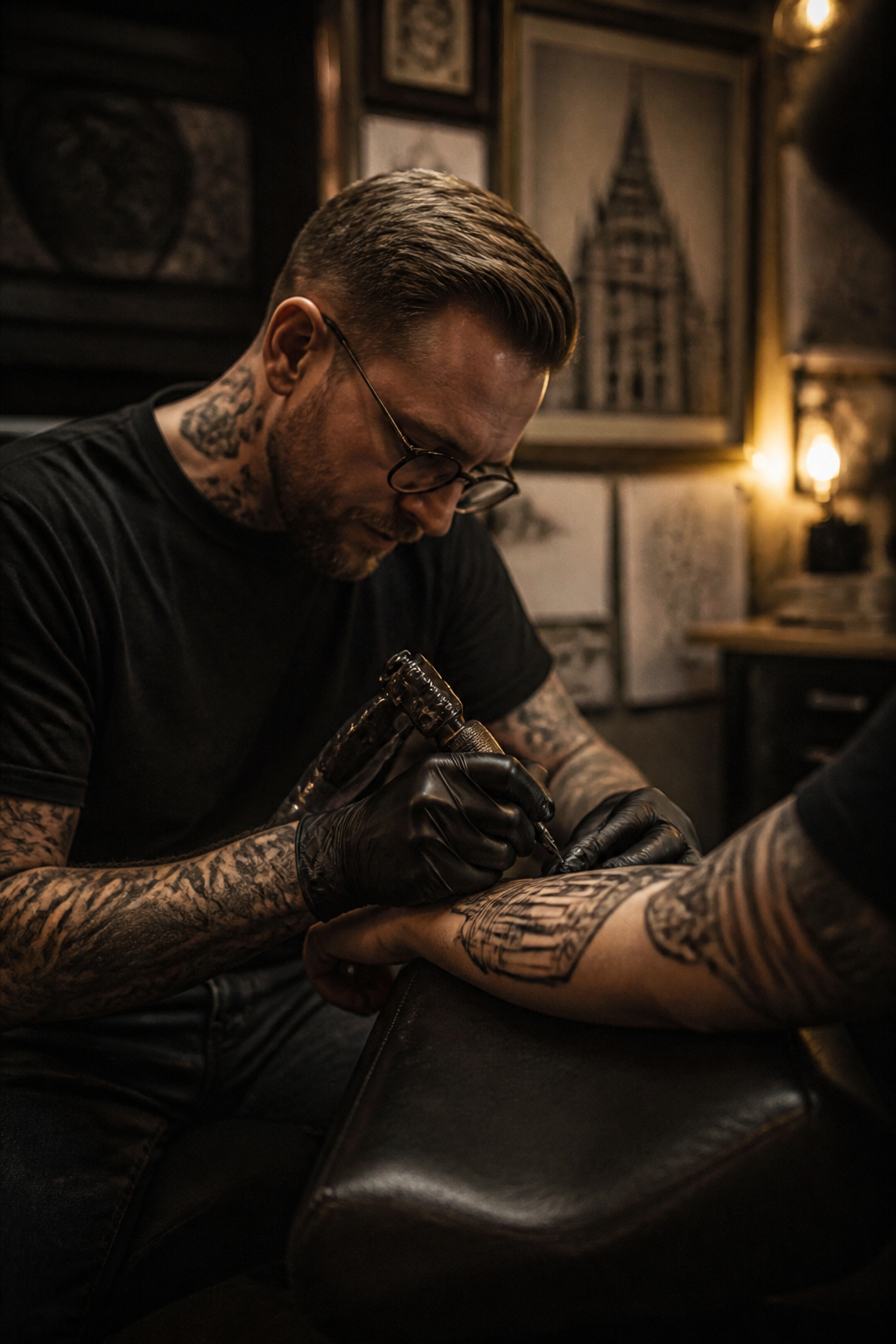
Emerging from the gritty, industrial landscape of Chicago, Julian Thorne is quickly becoming a name to watch in the underground circuit. His work bridges the gap between urban planning and body art, utilizing stark lines and deep black saturation to create pieces that look like structural blueprints. Thorne’s signature style, which he calls 'Structural Noir,' focuses on the interplay between human anatomy and the rigid geometry of city skylines.
A recent standout project saw Thorne completing a full-torso piece inspired by the brutalist architecture of London’s Barbican Estate. By using varying needle gauges, he managed to replicate the texture of poured concrete and weathered steel directly onto the skin. The result is a high-contrast masterpiece that moves fluidly with the wearer while maintaining a sense of immense, immovable weight.
Collectors seeking a piece from Thorne should be aware of his specific methodology. He rarely works from pre-drawn flashes, preferring instead to 'site-map' the design directly onto the client using surgical markers during the initial consultation. This ensures that every line complements the natural muscle flow, making the final tattoo feel less like an image and more like an extension of the body itself.
Before booking, potential clients should know that Thorne prioritizes long-form sessions. Because his work requires extreme precision and heavy ink packing, he often books in full-day blocks rather than hourly slots. This dedication to the craft ensures that the blackwork remains rich and velvety for years, resisting the common fading associated with large-scale dark art.
With his books filling up months in advance, Thorne remains selective about his projects, choosing concepts that challenge the boundaries of spatial design. For those lucky enough to secure a chair, the experience offers a unique blend of modern craftsmanship and industrial grit. It is a testament to how the next generation is pushing the limits of what black ink can achieve on the skin.