
Anatomy and Flow: The Definitive Guide to Thigh Tattoo Placement
12 days ago
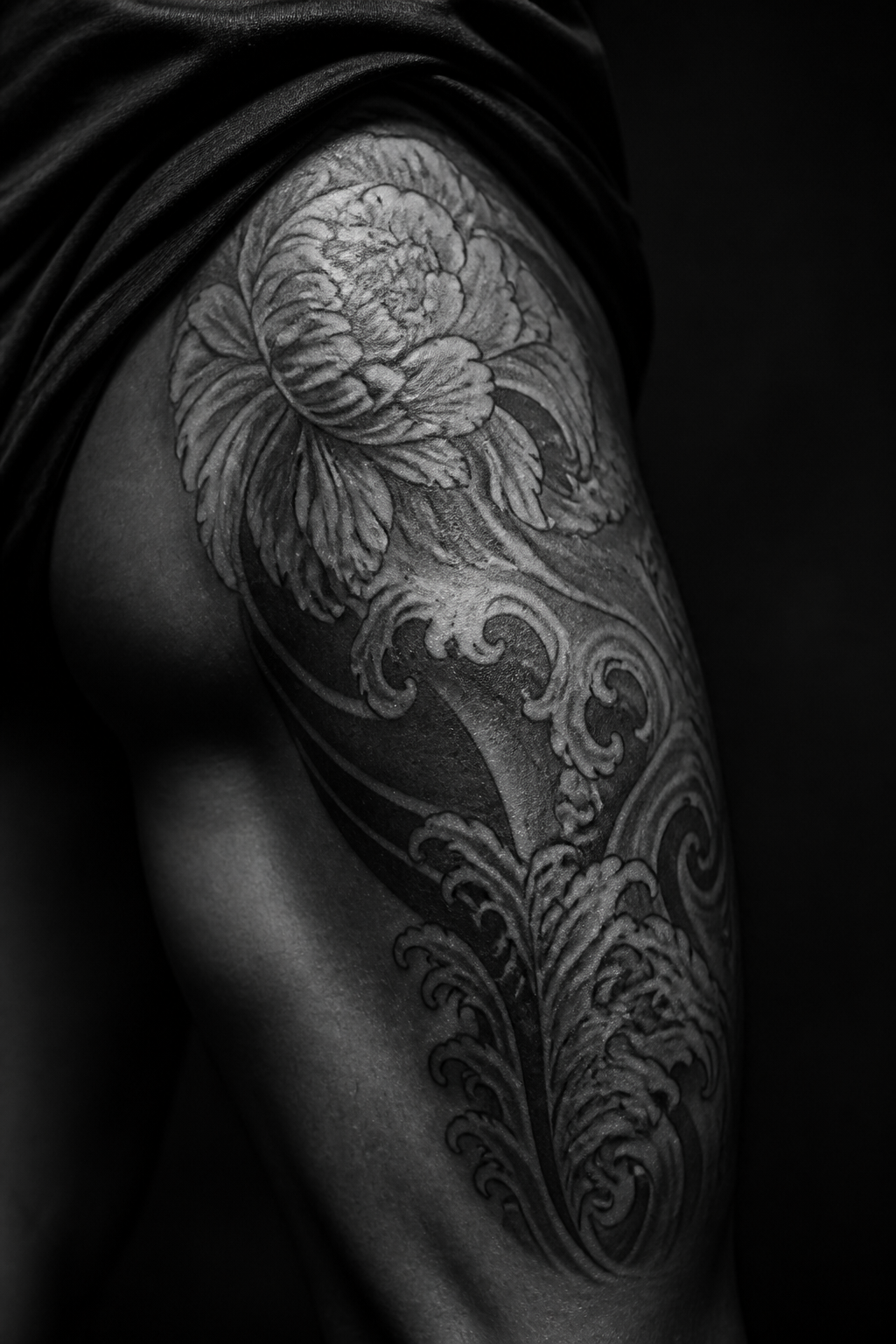
The thigh offers one of the most versatile canvases on the human body, providing a large, relatively flat surface that transitions into dramatic curves. When considering thigh tattoo placement, it is essential to account for how the skin moves while walking. Designs that sit on the front of the quadriceps tend to stay more static, while those wrapping toward the inner or outer thigh will shift significantly with movement, requiring a composition that accommodates this flow.
From a technical perspective, the thigh is a favorite among collectors because it holds detail exceptionally well over time. The skin here is generally thicker and less prone to sun exposure compared to the arms or lower legs. However, the outer thigh is significantly more comfortable than the inner thigh, where the skin becomes thinner and more sensitive. Choosing the right spot depends on your personal pain threshold and the complexity of the piece.
Designing for the curve of the leg requires a professional eye. A vertical composition helps elongate the leg, whereas horizontal elements can sometimes visually break the limb's natural line if not positioned carefully. Artists often use the natural 'mid-line' of the thigh as an anchor point, building the primary focal point of the artwork there before tapering the edges to follow the muscle groups toward the hip or knee.
Longevity is a major benefit of this specific area. Because the thigh is frequently covered by clothing, the pigments are shielded from UV damage, which is the primary cause of fading and blurring. While weight fluctuations can impact the tattoo, the upper leg is remarkably resilient. This makes it an ideal location for large-scale illustrative work or bold color pieces intended to remain vibrant for decades.
Properly mapping your tattoo placement also involves considering how it interacts with your wardrobe. A piece placed higher toward the hip remains a private statement, visible only in swimwear, while designs extending toward the knee are easily showcased in casual attire. Discussing these boundaries with your artist during the stencil phase ensures the art sits exactly where you want it relative to your daily life.
Ultimately, the thigh represents a bridge between high-impact visibility and easy concealment. By prioritizing the natural anatomy of the leg and understanding how the skin behaves under tension, you can ensure your ink remains a sharp, fluid addition to your collection. Whether it is a standalone piece or the start of a full leg sleeve, strategic placement is the key to a successful outcome.