
A Bloom of Heritage: Exploring the Classic Rose Tattoo Meaning
27 days ago
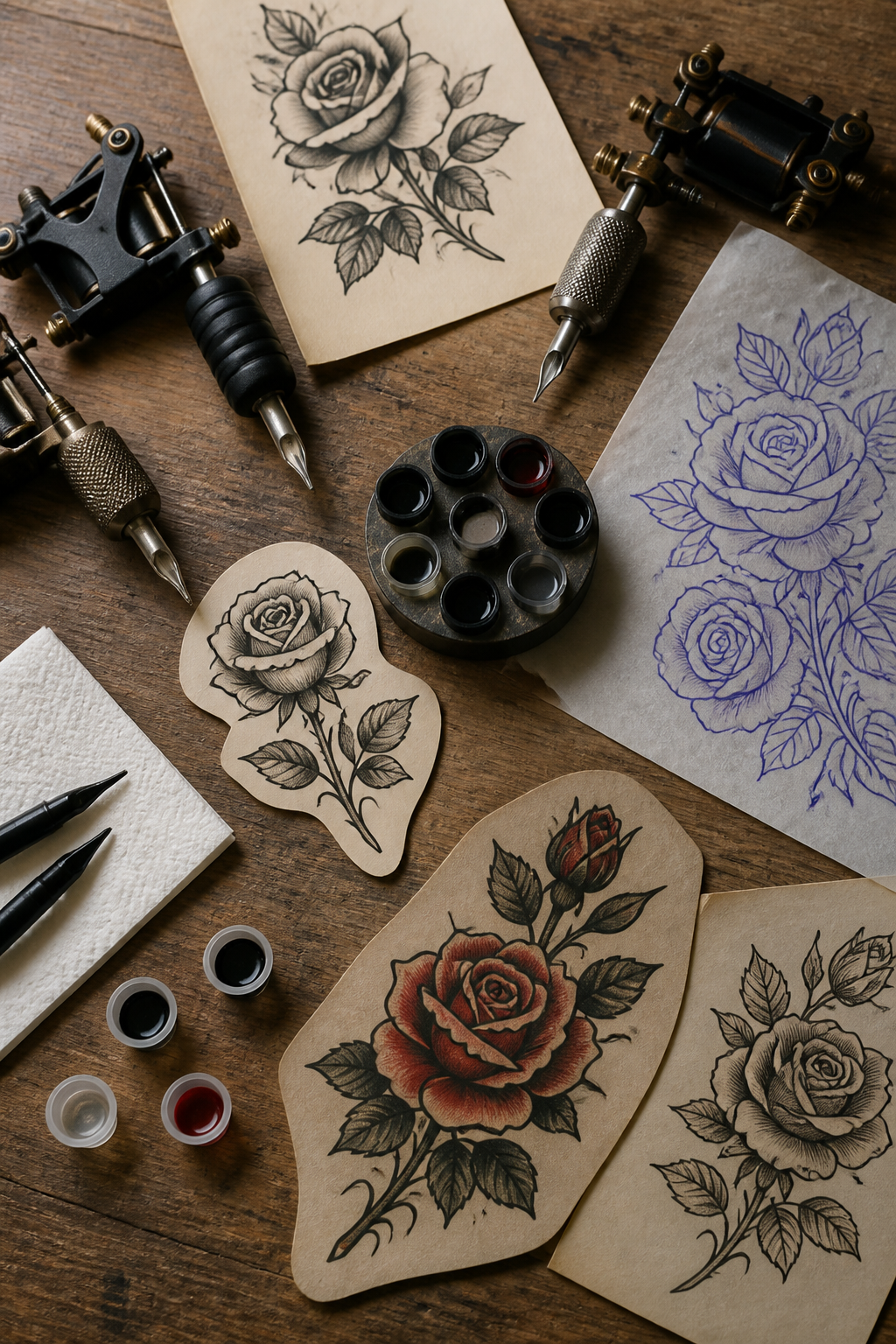
The rose is perhaps the most enduring icon in the history of western tattooing. While it originally gained massive popularity within the American Traditional movement, its roots reach back much further into maritime history. Sailors often chose the bloom as a tribute to the mothers, wives, and sisters they left behind on shore, serving as a reminder of beauty and home amidst the rough seas.
Today, the rose tattoo meaning is as varied as the artists who draw them. While red roses remain the quintessential symbol of passionate love and devotion, different colors have carved out their own specific niches. Yellow roses represent friendship and joy, while black roses often symbolize loss, rebellion, or the end of a significant life chapter, proving that color theory is vital to personal storytelling.
Modern wearers often reinterpret the rose by focusing on its duality. The contrast between the delicate, soft petals and the sharp, protective thorns speaks to the complexity of the human experience. It suggests that beauty is worth defending and that strength often grows alongside vulnerability, making it a powerful choice for those who have overcome personal hardships.
In contemporary studio culture, the rose is no longer confined to bold outlines and primary colors. We see it reimagined in hyper-realism, fine-line micro work, and even abstract watercolor styles. This versatility allows the flower to fit anywhere on the body, from a tiny accent behind the ear to a massive, sprawling centerpiece on a full chest piece.
Ultimately, the enduring appeal of this motif lies in its universal recognition. Even as trends shift toward more niche imagery, the rose remains a foundational element of the craft. It bridges the gap between the old-school sailors of the 1940s and the modern collector, proving that some symbols never lose their power to communicate profound emotion through ink.